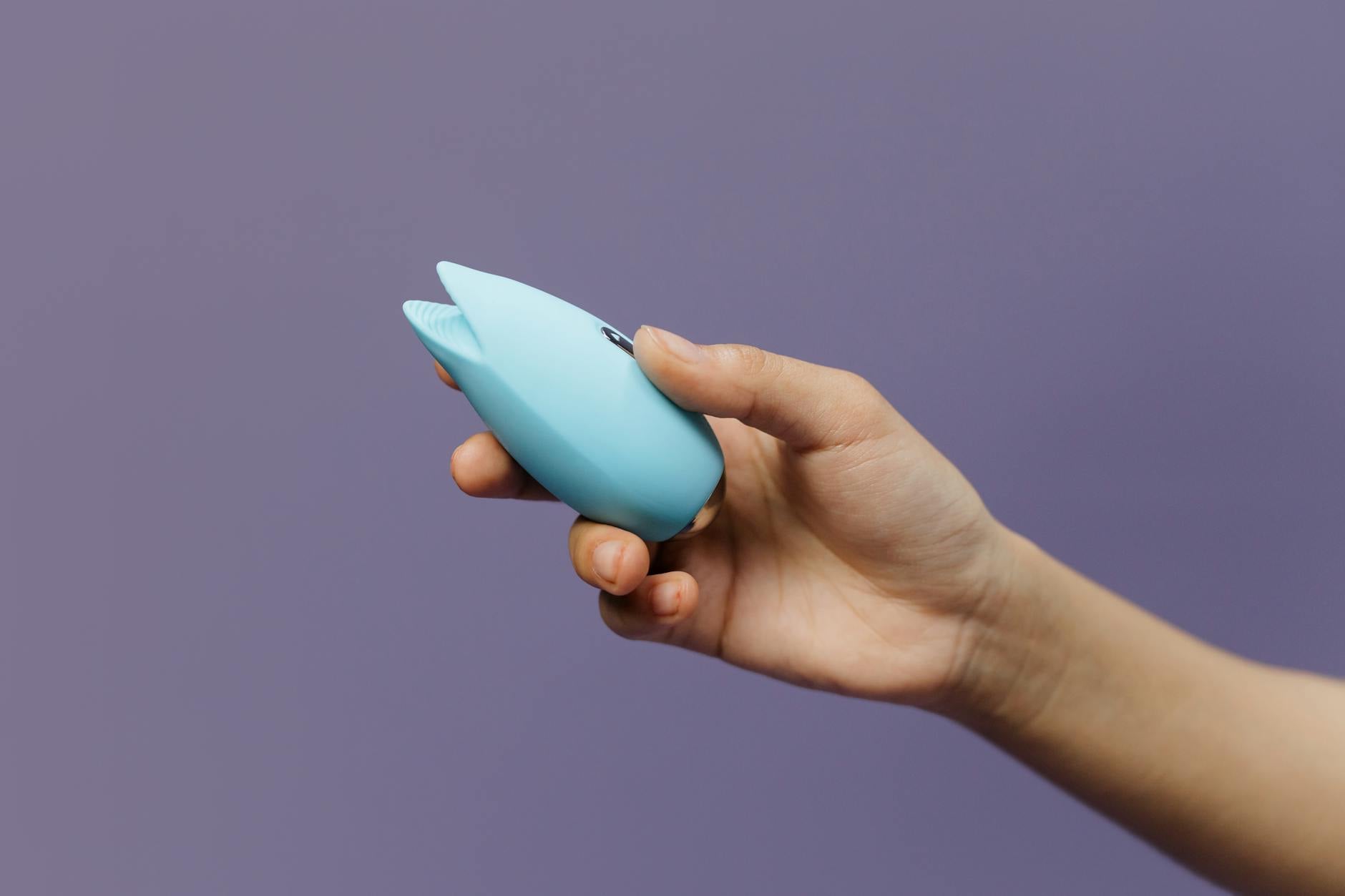
Clitoral sensitivity doesn't vanish overnight. It dims. Gradually, sometimes so slowly you don't notice until you realize you need twice as much stimulation to feel what used to come easily. That's not broken. That's just how bodies work across years.
The reasons are legion: hormonal fluctuations, medications that blunt sensation, stress that tightens the nervous system, years of friction from traditional vibrators that desensitize nerve endings, aging tissues that respond differently to stimulation. None of these are personal failures. They're just part of how sensation evolves.
Here's what I want you to know first: reduced clitoral sensitivity is one of the clearest cases where a lemon vibrator actually works better than conventional toys.
Most people assume intensity is the answer. Turn it up. Go harder. Buy something faster. That's the trap.
When clitoral tissue becomes less responsive, blunt force doesn't wake it up. It exhausts what's left of the sensation. Air suction works differently. Instead of vibrating directly against tissue, it creates a gentle pulling motion that stimulates nerves through suction rather than friction. This means you're engaging the nervous system in a fresh way, one your body hasn't adapted to yet.
Think of it this way: if you've been using the same vibrator for years, your nerve endings have essentially tuned it out. They've gotten used to the pattern. Air suction feels novel to your nervous system. Novelty brings sensitivity back to the surface.
The lemon vibrator (sometimes called a lemon sucker or lem vibrator) uses air-pulse technology specifically designed to create this sensation. It's gentler on tissue but somehow more effective at triggering arousal when sensitivity is low.
Most people with reduced clitoral sensitivity make the same mistake: they assume they need maximum intensity from the start. They jump to pattern 5 or 6 on their first try with the lemon vibrator and end up feeling nothing or disappointed.
Here's the actual protocol: start at pattern 1. Spend a full minute there. Let your nervous system recognize what's happening. Then move to pattern 2. Another minute. You're not rushing toward pleasure here. You're teaching your body that sensation is possible again.
This takes patience. It might take 10-15 minutes before you feel real arousal. That's normal. That's actually the point. Your clitoris isn't broken. It's just taking time to remember.
Once you've established that pattern 1-2 creates some response, you can gradually explore higher patterns in future sessions. But the first time, resist the urge to escalate. Patience is the accelerant here.
When sensitivity is reduced, the preamble matters more than the main event.
Most sex advice tells you that foreplay should be 10-20 minutes. If you're dealing with decreased clitoral sensitivity, double that. 20-30 minutes of non-genital touch, mental focus, breathing, or fantasy work before you even approach the clitoris.
Why? Because reduced sensation is often coupled with reduced arousal. Your whole system is a bit more sluggish. You need time to climb the arousal curve before the actual tool does its job.
Here's what I recommend: start with touch anywhere but the clitoris. Neck, breasts, inner thighs, behind the knees, ears. Something you haven't focused on in years. This primes your nervous system. Then sit with fantasy or a memory that works for you. Let your mind contribute before your body does.
Only then introduce the lemon vibrator. By that point, you've already begun the cascade of arousal. The toy isn't doing all the work alone.
This is critical and often overlooked: reduced clitoral sensitivity frequently comes with reduced natural lubrication. These two things don't have to happen together, but they often do.
Use water-based lubricant generously. Not because you're broken, but because it does two things at once. It reduces friction (which helps the air suction work more effectively), and it also provides sensory input. Coldness, wetness, texture. These are sensations your clitoris can still feel even when other stimulation feels muted.
Reapply the lube halfway through your session. Don't assume one application is enough. The point is to keep the sensation fresh and varied.
You might be wondering: should I replace my old vibrator entirely or use both?
Honestly, most people with reduced sensitivity benefit from switching to a lemon vibrator as their primary tool. The air suction retrains your nervous system in a way that vibration alone doesn't. But here's the nuance: if you've been using a specific pattern or toy that used to work for you, your body still remembers it. You might find that alternating between the two creates more sensation than either one alone.
What you absolutely should not do is keep reaching for the same old vibrator and cranking the intensity. That's pouring concrete over your sensitivity. It locks it in place.
The lemon clitoral vibrator is designed precisely for this scenario: when traditional vibrators stop working, air suction often does.
I spend a lot of time talking about the physical mechanics of reduced sensation, but the nervous system piece is equally real.
If you're stressed, grieving, anxious, or in a relationship where connection is strained, your clitoris will be less responsive. The parasympathetic nervous system has to be online for arousal to happen. When you're in fight-or-flight, your body prioritizes survival over sensation.
Sometimes the answer isn't a better toy. It's creating the conditions for your nervous system to feel safe. That means sleep, movement, maybe therapy, maybe time away from a stressor.
But toys can help bridge the gap. The lemon vibrator's gentle air suction doesn't demand intensity or performance from your nervous system. It invites. That matters when sensitivity is low and stress is high.
If you menstruate or have hormonal fluctuations, your clitoral sensitivity shifts throughout the cycle.
Post-ovulation (the luteal phase), sensitivity typically drops. Estrogen falls. Your whole body feels a bit duller. That's the worst time to assume your clitoris is permanently broken. It's just a phase.
Pre-ovulation, sensitivity typically peaks. If you're exploring a lemon vibrator for the first time, you might get clearer feedback about what works if you try it in the follicular phase when sensitivity is naturally higher.
This is one reason that consistent exploration matters more than occasional experiments. You need to understand your baseline across seasons, not just grab a toy once and decide it didn't work.
If clitoral sensitivity has dropped suddenly and dramatically, or if you're also experiencing pain, numbness in other parts of your body, or changes in sensation elsewhere, mention it to a doctor.
Reduced sensitivity can sometimes signal nerve damage, medication side effects, or hormonal shifts that deserve professional attention. A good gynecologist or sexual medicine specialist can help you figure out if it's something that needs treatment or just part of how your body is changing.
Reduced clitoral sensitivity is frustrating. I get it. You remember when touch felt like lightning, and now it feels like a whisper.
But here's what I've seen over and over: the people who restore sensation aren't the ones who buy the most intense vibrator. They're the ones who get curious. They try air suction. They slow down. They build longer foreplay. They use lubricant. They work with their cycle. They give it time.
The lemon sucker is the right tool for this work, but you're the one doing the real labor. Your patience, your willingness to explore differently, your openness to sensation returning gradually.
Sensitivity typically starts returning within 2-3 weeks of consistent, patient exploration. Some people feel real shifts within 3-5 sessions. But this isn't linear. You might have a breakthrough session, then feel like you're back to square one the next time. That's normal. The nervous system learns in loops, not straight lines. Stick with it for at least a month before deciding whether air suction works for your body.
Rarely. Unless there's nerve damage from surgery or injury, reduced sensitivity is almost always reversible or at least improvable. Hormones shift. Medication changes. Stress decreases. Your nervous system adapts. The lemon vibrator helps speed that adaptation along, but it's not usually a "one-time fix." Think of it as retraining, not repair.
No. 4-5 times a week is ideal. Your nervous system needs rest days to consolidate what it's learning. Daily use can actually desensitize you further, especially if you're using it at higher patterns. Quality matters more than frequency.
Air suction technology activates a different set of nerve fibers than traditional vibration. When you've gotten used to vibration patterns over years, your nerves have tuned them out. Air suction feels novel. Novelty brings sensation back to the surface. It's not about being stronger. It's about being different in exactly the right way.
Pattern 1 and 2 are your friends when you're rebuilding sensitivity. Many people assume they need high patterns, but gentleness is actually what teaches your nervous system to respond. Once you establish that sensation is possible again at lower patterns, you can explore higher ones. Start where your body can actually feel something, even if it's subtle.
Then the issue might not be the toy. It might be stress, relationship disconnect, medication side effects, or a physical health issue that needs professional attention. The lemon vibrator works for most people with reduced sensitivity, but if it doesn't, that's real information. Talk to a sexual medicine doctor or therapist. Sometimes the answer isn't intensity or air suction. Sometimes it's addressing what's actually causing the numbness.