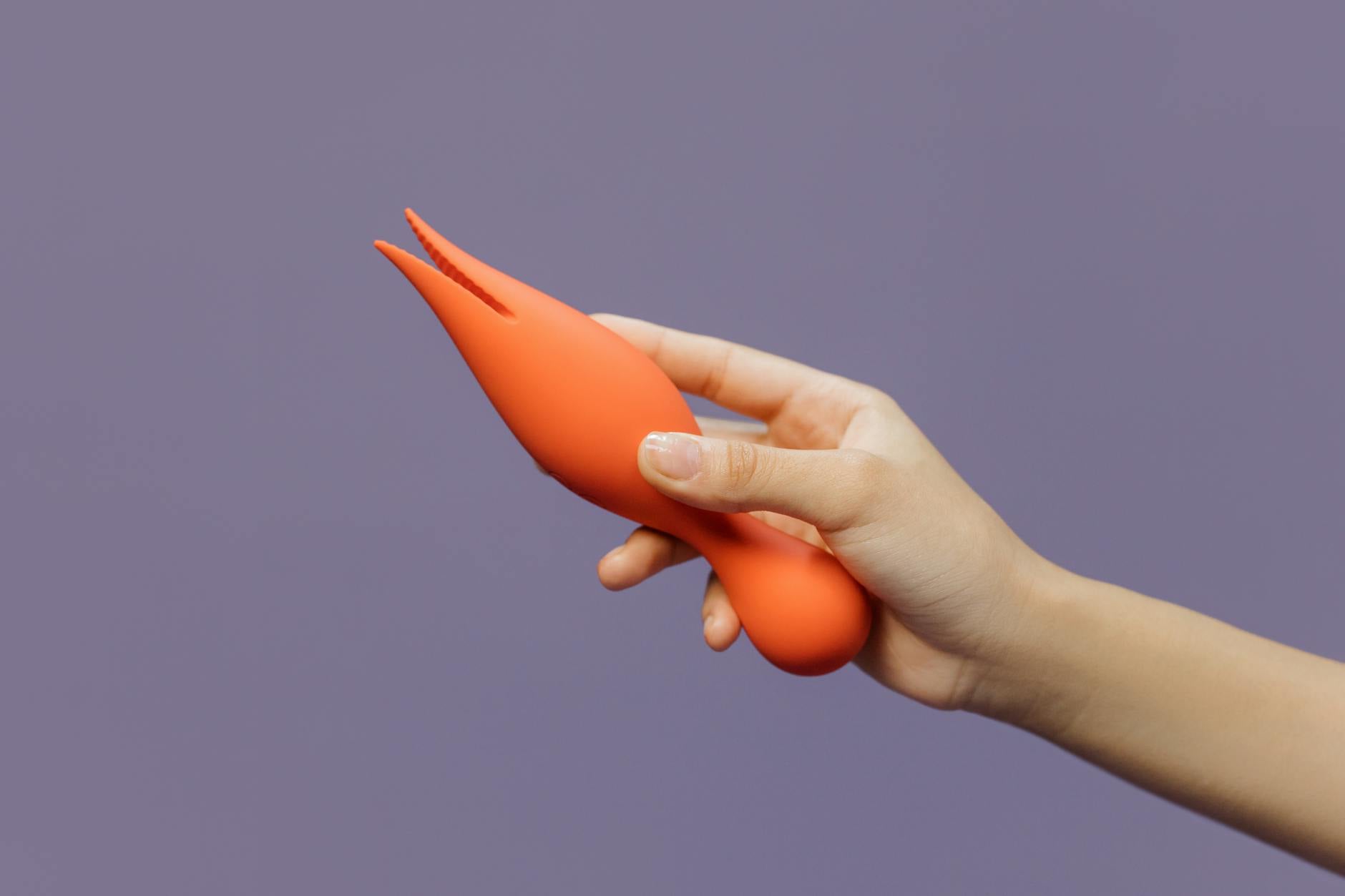
How to Use a Lemon Vibrator When You Feel Disconnected From Your Body
Dissociation, chronic stress, and trauma can make your body feel like it belongs to someone else. A clitoral vibrator becomes a tool for reconnection, not just pleasure.
Your body is here. Your mind is somewhere else. You might be able to describe every physical sensation on paper, but it doesn't feel like it's happening to you. That's dissociation. It's your nervous system's way of protecting you when things got too intense, too chaotic, or too unpredictable.
It's also wildly common, and it makes pleasure nearly impossible.
Disconnection from your body isn't laziness or prudishness. It's not a character flaw. It's a legitimate response to overwhelm, trauma, chronic stress, or years of not feeling safe enough to be fully present. And it sits underneath a lot of what people call "low libido" or "sexual dysfunction" when really, the issue is neurological. You're not broken. Your nervous system is protecting you. The problem is that same protection mechanism now keeps you from accessing sensation, arousal, and pleasure.
Think of dissociation as a spectrum, not a binary. On one end, you might feel emotionally present but physically numb. On the other, you're going through the motions while your mind narrates a grocery list.
Here's what I see most often in my practice: people who can orgasm but don't feel it happening. Their body responds on a physiological level, but there's a glass wall between sensation and awareness. The clitoris swells, lubrication increases, the nervous system fires. But the person reports feeling "nothing." That's disconnection. And it's treatable.
Other presentations include feeling like you're watching yourself from outside your body, emotional numbness alongside physical numbness, or the sensation that pleasure belongs to a different person entirely. Some clients describe it as their body moving on autopilot while they observe from a distance. All of these are forms of embodiment disruption.
Here's the neurophysiology: sensation requires attention. A vibrator, especially one with the suction technology in lemon vibrators, creates a sensory signal that's genuinely difficult to ignore. It's not subtle. The pulsing pattern stimulates nerve endings in a way that demands your nervous system's attention.
When you bring that kind of intentional stimulation to your body, you're essentially saying to your nervous system: "This is happening. To me. Right now." The signal is strong enough to cut through dissociation in a way that gentle touch sometimes cannot.
A lemon vibrator does something else that matters: it separates sensation from performance. Because the vibration is mechanical and consistent, you don't have to worry about "doing it right" or responding a certain way. The stimulation is coming from outside yourself. That means your only job is to notice. Just notice what's happening. That shift—from performing pleasure to observing sensation—is often where reconnection begins.
Start small and slow. This isn't about reaching an orgasm. It's about rebuilding the neural pathway between physical sensation and conscious awareness.
Step one: Safe space, full stop. You need to feel genuinely safe. No partner in the house, no interruptions, no time pressure. Dissociation often stems from unsafety, so the environment matters more than you think. A locked door, phone on silent, at least 20 minutes—that's the baseline.
Step two: Non-sexual touch first. Before you turn on the vibrator, spend five to ten minutes touching your own skin. Your forearms, your neck, your thighs. Nothing genital yet. The goal is to practice noticing sensation without pressure. Many people with dissociation have gotten so good at tuning out that they literally can't feel a gentle hand on their arm. This rewires that.
Step three: introduce the vibrator slowly. Turn on your lemon vibrator at the lowest setting. Start on a non-genital area first—your thigh, your forearm, your hip. The novelty of vibration will pull your attention. Let it. This is your nervous system learning that this sensation is safe and it's happening to your body right now. Stay there for two to three minutes.
Step four: move to the clitoris, same settings. Place the lemon vibrator against your clitoris at the lowest intensity. Your job is not to chase an orgasm. Your job is to narrate what you feel. Mentally or out loud. "I feel pressure." "I feel warmth." "I feel texture." The act of narration creates a bridge between body and awareness. That's embodiment. Stay here for five to ten minutes. The goal is presence, not outcome.
Step five: notice without judgment. Dissociation often comes with shame. "I should be feeling more." "Most people enjoy this." Stop. You're not most people. Your job right now is to notice what you feel, even if it's "barely anything." Progress in embodiment isn't measured by orgasms or intensity. It's measured by how much conscious awareness you bring to sensation.
Most people think embodiment work requires turning up the vibrator and chasing bigger sensation. It's actually the opposite. High intensity can push you further into dissociation because you're relying on the vibrator to do the feeling for you. Low intensity forces your nervous system to pay attention and integrate the signal. That's where the work happens.
If you find yourself thinking about what's for dinner or mentally replaying a conversation, that's not failure. That's your mind doing what it's been trained to do. Gently bring your attention back to sensation. You're literally rewiring neural pathways. It takes repetition.
Many people don't feel anything for the first few sessions using a lemon vibrator. That's normal. Your body is learning that presence is safe. Sometimes embodiment takes weeks. That's not because you're broken. It's because dissociation protected you for a reason, and your nervous system isn't going to abandon that strategy overnight. Be patient. You're doing something legitimately powerful.
If you're working through this with someone, the conversation matters more than the mechanics. Tell your partner: "I'm rebuilding my connection to sensation. That means progress looks like me noticing more, not necessarily orgasming. If I'm quiet or still, that's focus, not disinterest."
Have them sit with you while you use your lemon vibrator, but don't watch you. Read a book. Listen to music. Their job is to be present but not focused on you. That paradoxical combination—present but not watching—helps your nervous system feel safe and supported without being observed.
If your partner touches you during this practice, keep it light and slow. Ask them to narrate what they're doing: "I'm touching your arm now." That narration creates a running commentary that helps keep you present. Dissociation often happens in silence and ambiguity. Narration counters that.
If dissociation is severe or was caused by trauma, a clitoral vibrator alone won't fix it. You'll need a trauma-informed therapist, ideally one trained in somatic experiencing or EMDR. What I'm describing here works beautifully for garden-variety disconnection from stress or years of not paying attention to your body. It does not substitute for professional support if trauma is the root.
Some signs you need professional help: you feel disconnected during all physical sensations, not just sexual ones; dissociation is getting worse; you have no memory of chunks of time; or your disconnection is tied to specific trauma. A therapist plus embodiment work plus a lemon vibrator is a winning combination. Embodiment alone, without processing the root cause, can only take you so far.
Rebuilding embodiment isn't linear. Some days you'll feel more present. Some days you'll slip back. That's neurological, not a reflection of your commitment or effort. Keep showing up. Use your lemon vibrator as a tool for presence, not performance. Notice what happens when you bring intentional attention to your own body. That's where reconnection lives.
Your body isn't your enemy. Dissociation was trying to protect you. But you're safe now. And reconnecting with sensation, slowly and with genuine patience, is one of the most grounded acts of self-care you can do.
Yes, and that's actually the point. People with dissociation often report feeling very little even with intense vibration. That's your nervous system working hard to stay protected. The goal isn't to feel a lot right away. It's to practice noticing whatever you feel, even if it's subtle. Over time, with repeated gentle exposure and safety cues, that capacity for sensation usually expands. Patience matters more than intensity.
It depends on the root cause and how long you've been disconnected. Some people notice shifts in two to three weeks. Others take months. Chronic dissociation that's been present for years might take longer. The timeline also depends on whether you're doing this with professional support. A therapist plus self-directed embodiment work usually moves faster than either one alone. There's no "normal" timeframe. Your nervous system will reconnect when it feels safe enough.
Definitely your own. Embodiment work is vulnerable. Using your own device means you control the pace, intensity, and intention. It's yours alone. If you're in a relationship and want to use a vibrator together eventually, that's a separate conversation and a different practice. Start with your own device in your own space. That boundary actually strengthens both embodiment and trust.
No. Low libido usually means you're not interested in sex. Dissociation means you're physically disconnected from your body even when arousal is theoretically present. You might be able to have an orgasm but not feel it. You might want to be intimate but feel like you're watching yourself from outside your body. They're different problems with different solutions. Understanding which one you're experiencing changes everything about how you address it.
That can happen, especially early on. Sometimes increased sensation can feel destabilizing if you've been numb for a long time. If using a lemon vibrator makes dissociation worse, stop and talk to a therapist. You might benefit from slower, lower-intensity approaches first. You might need professional support before embodiment work is grounded enough to help. There's no shame in that. Your nervous system will tell you what it's ready for.
Some medications numb sensation, and that's worth discussing with your prescriber. But dissociation and numbness from medication are separate issues. You might need to address the medication question, work with a therapist on the dissociation itself, and practice embodiment simultaneously. It's not an either-or. If your medication is contributing to numbness, your doctor can often adjust dosage or timing. That conversation is separate from the embodiment work, but both matter.
Disconnection from your body feels permanent until it isn't. You don't have to live in that glass wall. A lemon vibrator is one tool. Presence is another. A therapist might be a third. Start with what feels most accessible. Notice what happens. Trust the process, even when progress feels impossibly slow. Your nervous system is learning to feel safe again. That takes time. That's okay.