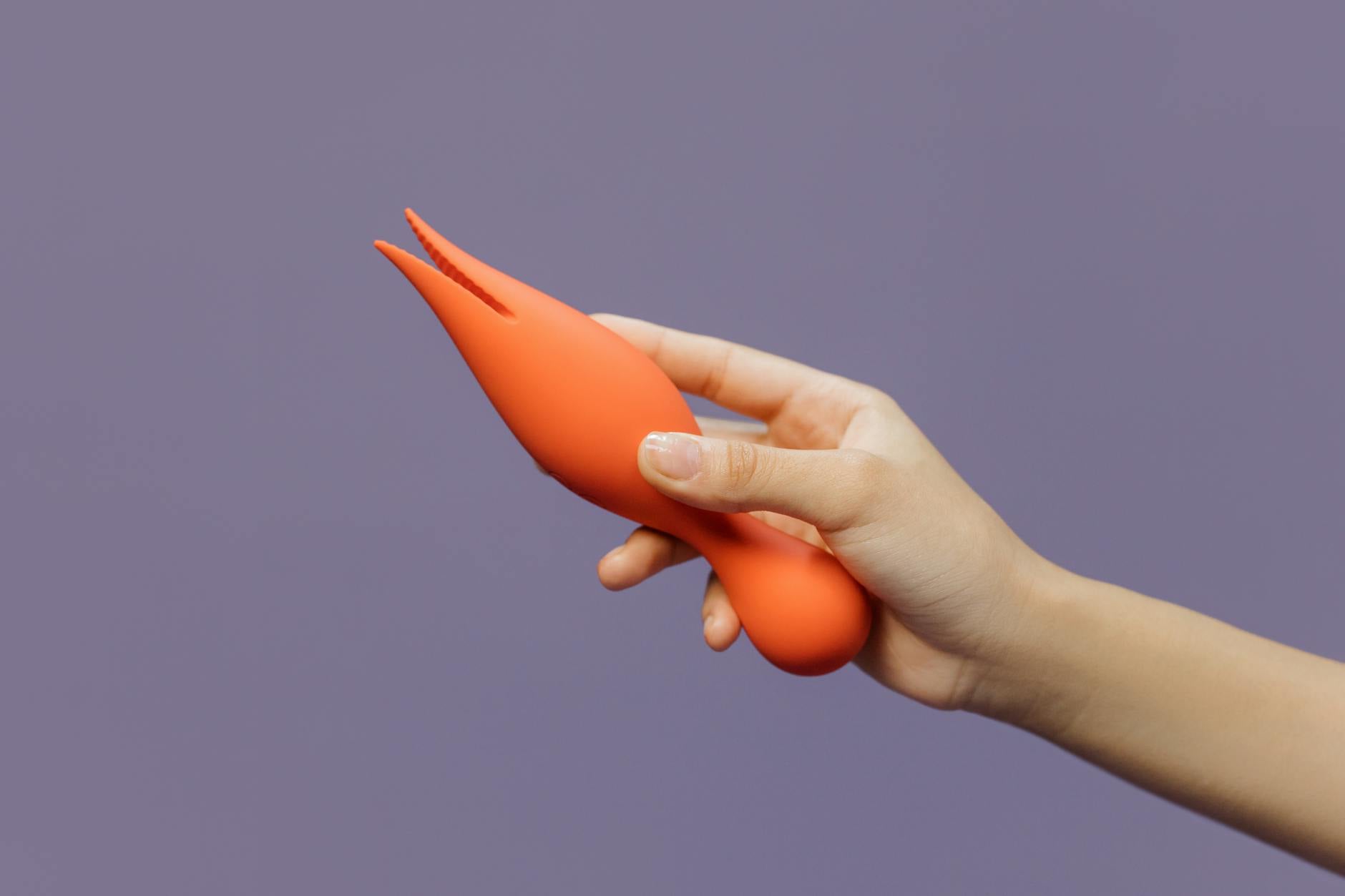
How to Use a Lemon Vibrator With a New Partner While Setting Boundaries
The conversation about introducing a lemon clitoral vibrator to a fresh relationship is less about the toy and more about what you're actually saying: I know what I want, and I trust you to listen.
You meet someone. Chemistry happens. And then you face a choice that feels weirdly loaded: do you bring your lemon vibrator into the picture, and if so, when and how? The fear that usually surfaces is less about the toy itself and more about what introducing it might signal. That you're not satisfied. That the dynamic will shift. That mentioning pleasure out loud will somehow break the spell.
Here's what I see clinically: people who struggle with introducing toys into new relationships aren't usually worried about the toy. They're worried about boundaries. Specifically, whether setting one will cost them the relationship.
The thing is, introducing a clitoral vibrator like the lemon sucker is one of the clearest ways to establish early that you know your own pleasure and you're willing to talk about it. That's not vulnerable in the way we think of vulnerability. It's actually the opposite. It's competent.
When you say "I use a lemon vibrator and I enjoy it," you're doing three things at once: naming your own agency, testing whether your partner can hear you without defensiveness, and setting the template for how future conversations about sex will go. Partners who can't handle that conversation usually signal other boundary issues downstream.
So the question isn't really "Should I introduce my lemon clitoral vibrator?" It's "Does my partner deserve to know who I am?" If the answer is yes, the toy is just the delivery mechanism.
There's no perfect moment, but some are definitely better than others. The worst time is mid-sex when things are already happening. The best times are when you're both relaxed, clothed, and there's no performance pressure.
Some people do it outside the bedroom entirely. "Hey, I wanted to talk about something that's part of my sexual life." Other people ease into it during foreplay but before penetration. "I really love this sensation" while showing them the lemon vibrator in action.
What matters is that it's deliberate, not accidental. You're not trying to surprise someone with a toy mid-intimacy. You're introducing an idea you've already decided on, which is different.
The framing also matters. "I want to use this toy with you" is different from "I need this toy to orgasm." One invites collaboration. The other creates pressure. If you do need the toy to finish, that's fine, but lead with invitation first. The practicality can follow once they've had a chance to process.
Honestly though, you don't need a script. You need clarity. Here's what clarity looks like:
Clarity is: "I've been using a lemon vibrator for a while because I really enjoy the sensation. I'd like to keep using it when we're together sometimes, and I want to know how you feel about that."
Confusion is: "I have this toy I use sometimes, but it's not a big deal, and you don't have to feel weird about it or anything." (You're already apologizing and minimizing, which signals that you expect them to be uncomfortable.)
The second version creates work for your partner. They have to figure out what you actually want. The first version does the work for them. They just have to answer the question.
Some partners will be excited. Some will need reassurance that it's not a replacement for them. Some will want to understand how it works. Some will ask to try it or watch. Any of those responses is workable. The non-workable response is "No, I don't want that in our sex life," because that's a fundamental incompatibility about your agency, and you've just learned something important about whether this relationship can hold who you actually are.
Assuming they've said yes or "let me think about it," the physical introduction is less fraught. But there are still smart ways to do it.
Start slow with intensity. Don't jump to setting four. Show them settings one and two. Let them feel what the sensation is actually like before you're mid-session and everything is heightened.
Use it on yourself first. A lot of partners feel less threatened if they see you enjoying it independently before you ask them to integrate it. They're watching you have pleasure, which is actually deeply intimate.
Explain the sensation. "This is an air-suction vibrator, so it feels different from a traditional vibrator. It's more gentle initially but builds intensity." You're narrating your own pleasure, which is sexy and also informative.
Ask for feedback without pressure. "Does this feel okay for you?" is different from "Do you like this?" The first is about comfort. The second creates performance anxiety for both of you.
Poor reactions usually look like one of three things: defensiveness ("I'm not enough for you?"), disgust ("That's weird"), or withdrawal (sudden distance). None of these are about the toy. They're about your partner's own insecurity or sexual shame.
You get to decide what to do with that. You can try to talk through it. "This isn't about you. This is about my body and what I enjoy." You can ask directly: "What feels scary about this?" Sometimes partners need reassurance that sex with them is still central. Sometimes they need to hear that pleasure is a skill you're both building together, not a deficit you're fixing alone.
But here's what you don't do: you don't put the lemon vibrator away and pretend you don't want it. That's swallowing a boundary, and you'll resent them for it later. Resentment is the actual relationship killer, not the toy.
If they genuinely cannot accept this part of you, that's information. It might be a dealbreaker. It might be something they need time with. But you get to know that early, which is a gift, honestly.
Here's the part that actually transforms the experience: when your partner understands that introducing a lemon clitoral vibrator isn't about them failing, it becomes collaborative.
Suddenly you're not performing. You're not self-conscious. You're saying "Here's what feels good" and showing them. That's information they can use for the rest of your sexual relationship together. They learn what gets you there. They see your arousal in real time. They get to be part of something that's actually about you, not about them.
That kind of transparency is rare. Most couples never get there. They have sex in silence about the things that matter most. So when you introduce a lemon sucker and they see you light up, they're not jealous of the toy. They're turned on by you. They're learning you.
There's a difference between "I use this myself" and "I'd like you to use this on me." The second one requires a different kind of trust, because you're handing them control of your own pleasure.
Some people love that. Some find it exposing. If it feels exposing, that's worth naming. "I want to try this, but I might need to pause if I feel self-conscious." Partners who respect boundaries will pause. Partners who push through will show you something important about whether they can hear your no.
If you do want them to use the lemon vibrator on you, show them how. "I like it when you hold it here," or "A little slower," or "I want to control the intensity." You're still in charge, even when they have the toy in their hand. That's boundary-setting at its cleanest.
Early on, mentioning your lemon vibrator feels like a risk. Over time, if your partner can handle it, it becomes part of how you relate. You're not hiding parts of yourself. You're not managing their comfort at the cost of your own. You're just... together, in a real way.
That doesn't mean every partner will be able to do this. But the ones worth building a long-term relationship with can. They can sit with their own insecurity, ask questions, and eventually even enjoy watching you enjoy yourself. That's the kind of partner worth knowing.
The lemon clitoral vibrator is just a tool. But introducing it early is a test. Not of love, but of whether someone can show up for all of who you are. If they can, the rest gets easier.
Yes, if you both want to and it feels right. Some couples integrate it immediately. Others wait a few months. The timing matters less than whether you've actually talked about it first. If you've said "I'd like to use my lemon sucker sometimes" and they've said yes, then yes. Use it. Let your body have what it needs. That's the whole point.
That's insecurity talking, and it's worth addressing directly. "This isn't about you. I enjoy this sensation independently. When we're together, I want to keep enjoying it. That's not about you being enough or not enough. That's about me knowing what I like." Some partners will hear that and relax. Some won't. The ones who can't are showing you that they can't separate their ego from your pleasure, which is a bigger issue than the toy.
It's actually fine to talk about toys before you've had deeper emotional conversations. Toys are concrete. Emotions are abstract. Sometimes the toy conversation is actually a gateway to the bigger stuff, because you're practicing honesty about a low-stakes thing. That practice builds trust for the higher-stakes conversations.
Watch their body language and listen to what they don't say. If they're quiet, ask. "I want to make sure you're actually comfortable with this." People often say yes when they mean "I'll think about it" or "I'm processing." Give them space to update you. And pay attention to whether they avoid the toy or avoid you when it's present. Avoidance is usually a signal that something isn't actually resolved.
Yes. When both people are genuinely on board, sharing pleasure deepens intimacy. You're vulnerable. You're honest. You're seeing each other without pretense. That builds trust faster than almost anything else. But only if it's truly mutual. If one person is performing enthusiasm, it feels hollow and creates distance instead.
That's fine too. The conversation doesn't get easier with time, but the foundation is already there. You can say, "I've never mentioned this, but I've been using a lemon vibrator, and I'd like to incorporate it with you." Some partners will wonder why you didn't say so earlier. That's a conversation worth having. It might surface other places where you've been hiding. But it's also an opportunity to reset how you talk about pleasure going forward.
Introducing a lemon vibrator to a new relationship is a small act with big implications. You're saying: I know myself. I'm willing to be honest about what that means. And I'm going to find out whether you can handle it.
Most people can, especially when you frame it with clarity instead of apology. The ones who can't are showing you something important about their capacity for intimacy and their relationship to their own pleasure insecurity.
Your lemon sucker isn't the risk. Staying silent about who you are is. So talk about it. Show them what you like. And find out whether they're someone who can see all of you and still want to be there.