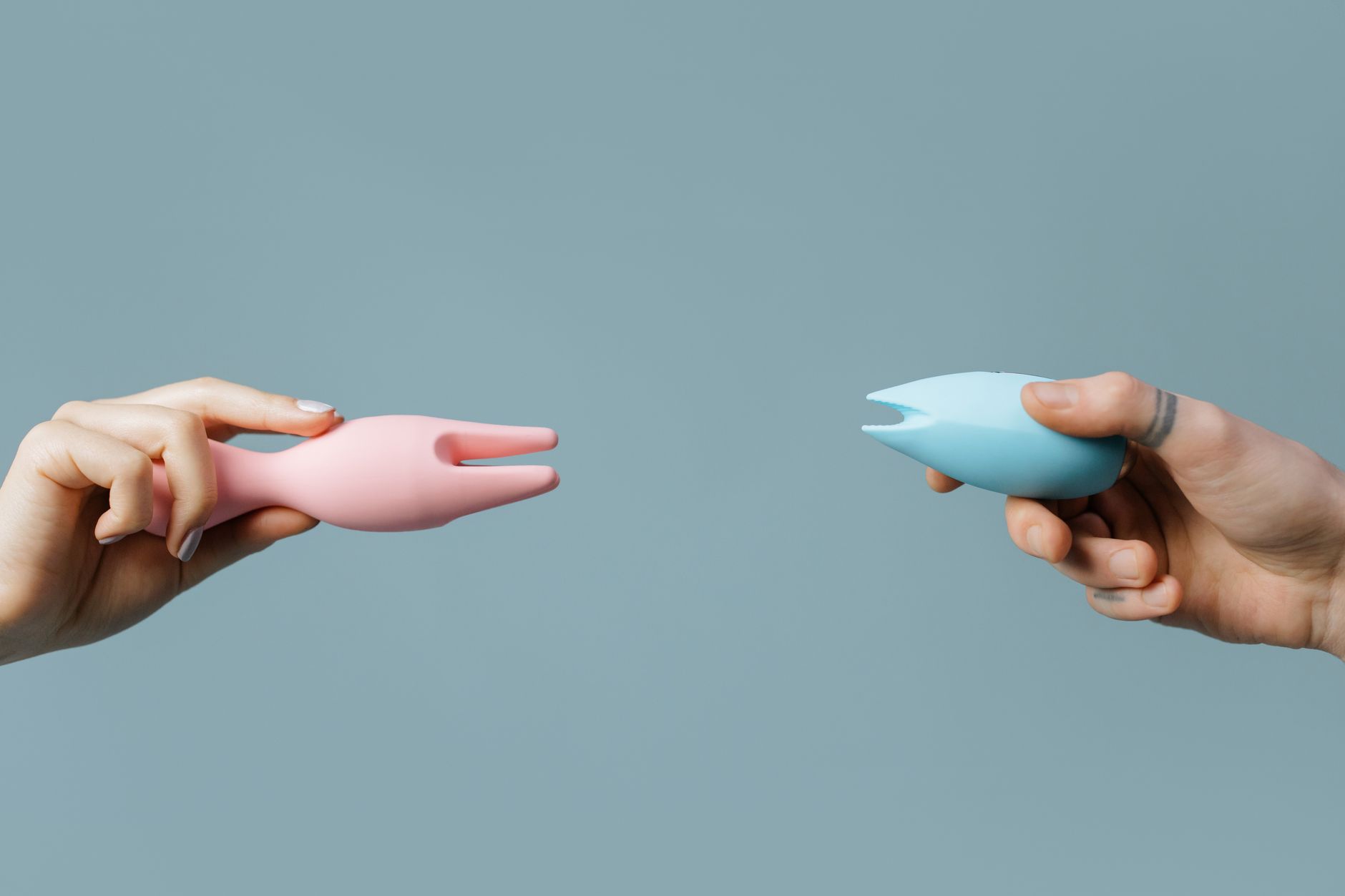
When desire shows up after silence
Let's be real. If you haven't had sex in years, the fact that you want to now is significant. Maybe your relationship is healing. Maybe you're newly single and surprised by your own body. Maybe life circumstances finally shifted. Whatever the reason, this moment requires a different approach than the one that would work for someone with an active sex life.
Your nervous system needs gentle re-entry. Your pelvic floor might be tighter than it used to be. Your sensitivity has likely changed. And your mind needs reassurance that pleasure is okay again.
Why air-suction vibrators feel different after a long break
When you haven't had sexual touch in years, direct vibration can feel overwhelming. The clitoral tissue is exquisitely sensitive by design, and reawakening that sensitivity after dormancy is not the same as maintaining it. Many people report that traditional vibrators feel too intense, too buzzy, or almost painful when they're reconnecting after a long gap.
Air-suction technology works differently. Instead of vibration, it creates a gentle pulsing suction that stimulates the entire clitoral complex without the friction-based pressure of a standard vibrator. For bodies re-entering pleasure after years of absence, this matters profoundly. The lem vibrator uses this technology specifically because it allows arousal to build gradually, without triggering the nervous system into fight-or-flight mode.
Research on sexual response in people returning to partnered or solo sex after extended gaps shows that slower, more diffuse stimulation produces better outcomes. Your clitoral nerve endings are waking up. They deserve patience.
The first conversation you need to have with yourself
Before you touch anything, sit with this: pleasure after years away is not the same as guilt. You're not betraying anyone. You're not being unfaithful. You're not rushing or being reckless. You're listening to your body.
If you're working through this with a partner, have the conversation explicitly. "I want to explore pleasure again, and I need to do it on my own timeline at first." Most partners respond with relief when you're direct like this. The ambiguity is what creates tension.
If you're alone, the conversation is equally important. Your brain might kick up shame or anxiety. Name it. Say it out loud: "This is normal. My body is allowed to want this. I'm safe." That's not woo-woo. That's nervous system regulation.
How to start: solo exploration in a body that's been dormant
Set aside 20-30 minutes when you won't be interrupted. You're not aiming for orgasm. You're aiming for comfort and curiosity.
Start clothed. Touch your body over your underwear first. Notice where you feel pleasure, where you feel tension, where you feel nothing. Most people after a long gap report numbness or deadness in the genital region. That's not permanent. It's just been on pause.
When you're ready, use a lemon clitoral vibrator on the lowest setting. Start away from the clitoris entirely. Trace the inner thighs, the outer lips, the lower abdomen. The clitoris is much larger than most people realize. It extends internally and around the vulva. You can stimulate the entire network of nerves before you ever directly touch the glans.
If direct contact feels startling or too intense, stay in the surrounding area. Some people need three to five sessions of just exploration before they're ready for direct stimulation. That's completely normal and actually optimal. You're remapping pleasure pathways. That takes time.
Managing the physical aspects: what actually changes
After years without sexual activity, you might notice:
Lubrication takes longer to arrive. This doesn't mean anything is wrong. It means you're out of practice. Your body will remember faster than you expect, but you'll likely need water-based lubricant initially. This is pragmatic, not shameful.
Orgasm might feel different or distant. Some people report that orgasms after a long gap feel muted or different in quality. Others report the opposite: overwhelming intensity they'd forgotten existed. Both are normal variations. Your nervous system is recalibrating.
Your pelvic floor might be gripping. Years without sexual activity often means the pelvic floor muscles become tighter, especially if you've been holding tension around sexuality, shame, or loss of desire. Using a lemon vibrator on low settings actually helps. The gentle stimulation teaches your pelvic floor to relax. You're not forcing anything. You're inviting.
The emotional surges are real. Reconnecting with pleasure can trigger grief, joy, anger, or sadness all at once. You might cry during pleasure. That's not a sign to stop. That's your nervous system releasing something it's been holding. Pause if you need to, but don't interpret it as failure.
When to bring a partner back in
If you're coupled, the question "When do we try this together?" matters deeply. The answer is: not until you've felt safe alone first.
Your nervous system needs to know that pleasure is possible before you add another person's presence. Once you've had a few solo sessions where you felt some combination of pleasure, curiosity, or even just comfortable, you can introduce your partner.
Start with communication, not sex. Show your partner the lemon vibrator. Tell them what you're learning about your body. Let them know what feels good and what doesn't. Many people skip this step and jump straight to partnered activity. That's where things derail.
When you do come together, consider this: your partner stimulates you with the vibrator, or you use it on yourself while they're present and touching you elsewhere. This hybrid approach lets you maintain control of your pleasure while feeling their presence and desire.
The mindset shifts that make the difference
You're not making up for lost time. This isn't a race to orgasm or a proof that you're "normal" again. Pleasure is the point, not the destination.
Forgive your body for changing. Your tissue has changed, your nervous system has changed, your hormones have shifted. That's not betrayal. That's age and time and life.
Let yourself be curious instead of goal-oriented. A lemon vibrator isn't a tool to "make" orgasm happen. It's an invitation to reconnect with sensation. If that leads to orgasm, wonderful. If it doesn't, you've still succeeded by having felt something.
FAQ: Reawakening pleasure after a long gap
How long does it usually take for pleasure to feel normal again after years without sex?
There's no universal timeline, but most people report noticeable shifts within four to six weeks of regular exploration. Some take longer. Some are surprised by how quickly their body remembers. The variable is usually psychological, not physiological. If you're carrying shame or fear around sexuality, that extends the timeline. If you can approach it with gentleness and curiosity, it usually accelerates.
Can air-suction vibrators like the lem vibrator cause damage after a long break?
No. Air-suction technology is actually gentler on sensitive tissue than traditional vibrators precisely because it doesn't rely on friction. Start on the lowest setting, avoid direct clitoral contact initially, and use plenty of lubrication if your natural lubrication is slow to arrive. Your body will tell you if something feels too intense. Listen to it.
Is it normal to feel nothing or numbness when using a lemon clitoral vibrator at first?
Completely normal. After years without sexual stimulation, the nerve endings in the clitoral region can feel dormant. Consistent, gentle stimulation wakes them back up. This usually happens over days or weeks, not hours. Some people report that sensation returns suddenly. Others notice gradual increases. Both patterns are fine.
My partner is worried I'm having an affair or that something else is going on. How do I explain that I just want pleasure again?
Be direct and invite them into the process. Say something like: "I've been noticing that I want physical intimacy again, and I want to explore that. I'm starting on my own to understand what feels good, and I'd love your support." Most anxious partners are actually relieved to hear that their partner wants them. The ambiguity is what creates fear.
Should I use lemon sexual toys solo first or with my partner right away?
Solo first. Your nervous system needs to feel safe with pleasure before you add another person's presence or expectations. Once you've had a few positive solo experiences, your partner's participation will feel like an addition to something already good, not a performance you have to pull off.
What if I still don't feel desire after trying a lemon vibrator?
That's worth exploring with a professional. Desire doesn't always come back just because you have better tools. Sometimes there's a medical component (low testosterone, thyroid issues, medication side effects). Sometimes there's an emotional component (unresolved relationship trauma, grief, depression). Sometimes both. A therapist or your GP can help you figure out which. The vibrator is a tool for reconnection, not a cure for absence of desire.
You're not starting over. You're reconnecting.
Years without sex might feel like you're beginning from zero. You're not. Your body remembers pleasure. Your nervous system knows how to feel good. You're just reintroducing yourself to something that's still there, just dormant.
A lemon clitoral vibrator gives you permission to go slowly. It's designed for gentleness and gradual arousal. It works with your body instead of demanding a response from it.
Start small. Be patient with yourself. Your pleasure matters. And if you want support navigating the emotional or relational pieces of this, reach out.