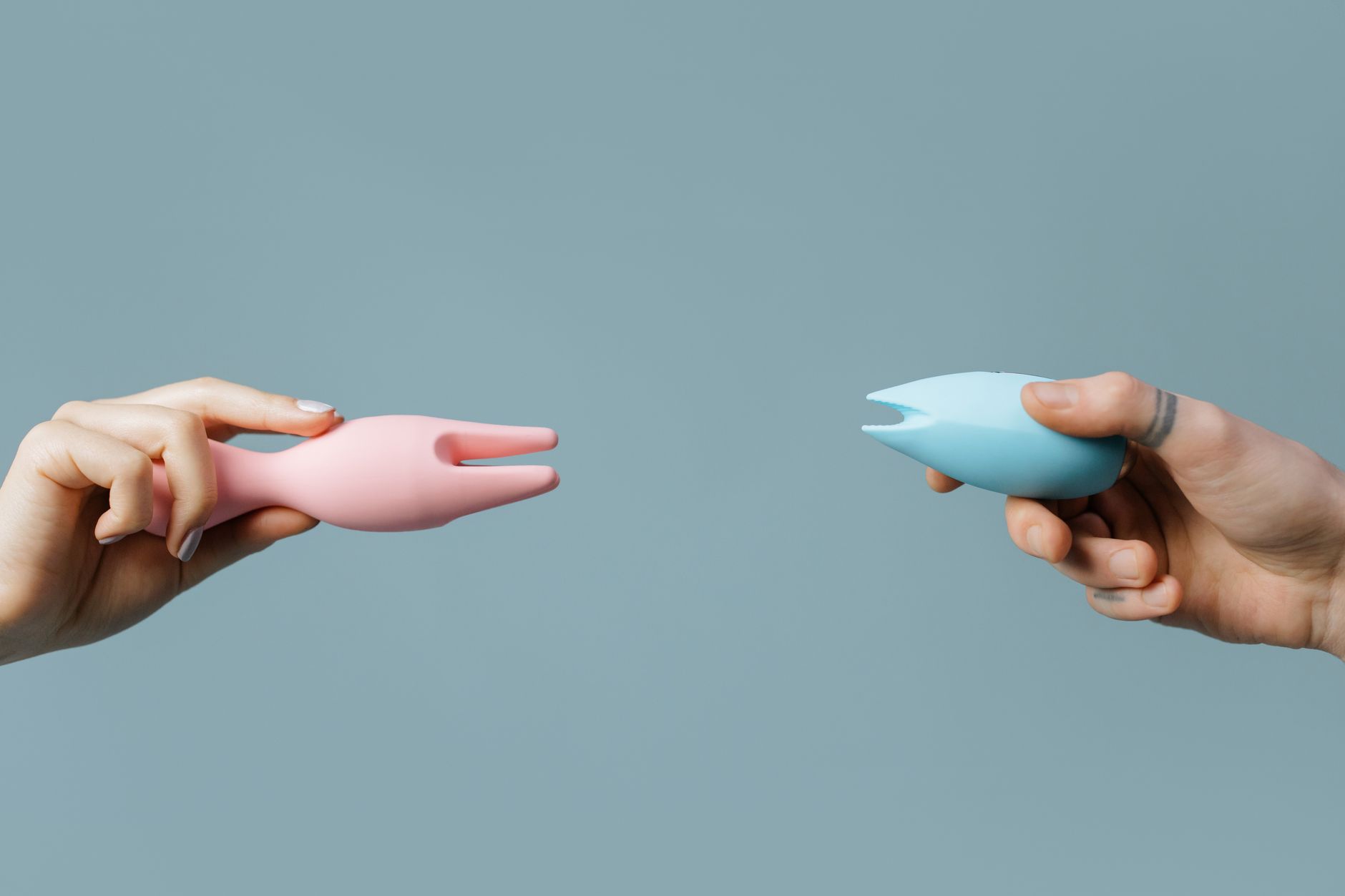
How to Use a Lemon Vibrator When You Orgasm Too Quickly
Rapid climax isn't a flaw. It's feedback. Here's how to use air-suction technology to build longer plateaus, explore new patterns, and reclaim control over your own pleasure.
Here's the thing nobody mentions: quick orgasms often mean your body knows what it likes. That's not weakness. That's actually data. But if you want to extend the experience, build more sensation, or explore what a longer plateau feels like, a lemon vibrator like the Lem can become your best tool for learning exactly how.
Rapid climax shows up in bodies for wildly different reasons. Sometimes it's anxiety. Sometimes it's years of solo practice that created a specific pathway. Sometimes it's just how your nervous system is wired. Sometimes it's medication. And sometimes, honestly, it's perfect exactly as is. But if you're here because you want options, I've got them.
Most traditional vibrators use direct friction. They're fast and efficient at one thing: getting you to the finish line as quickly as possible. If you already climax on the quicker side, a standard vibrator often accelerates that process even more. You end up racing to the peak instead of building toward it.
Air-suction vibrators work differently. They use gentle pressure waves instead of mechanical vibration. This means your nervous system receives stimulation in a way that feels different enough to interrupt the automatic fast-orgasm pattern. The suction pattern itself creates a slower buildup, especially at lower intensities.
Think of it this way: a standard vibrator is a highway. An air-suction device like the Lem is a scenic route. Same destination, but the journey changes how the arrival feels.
Start with the Lem on pattern 1 or 2, the lowest intensity settings. Not because you need gentle stimulation, but because you're training your body to recognize pleasure at multiple levels instead of rocketing straight to orgasm. Spend 5-10 minutes at this level. Your job isn't to climax. Your job is to notice what happens at low intensity.
After a few minutes, move to pattern 3 or 4. Again, stay here for several minutes. The key is slowing down the progression. Most people who climax quickly are used to ramping intensity fast. You're reversing that habit.
When you feel close to orgasm at a mid-intensity level, dial back to pattern 1. Yes, really. This interruption teaches your nervous system that pleasure isn't a one-way climb. You can go up and down. You can hover. You're the one steering.
After 10-15 minutes of this pacing, when you finally move to higher intensity, the climax itself often feels different. Deeper. More full-bodied.
One of the weirdest discoveries my clients make is that their fastest orgasms happen because they've never practiced staying on the edge without crossing it.
Once you're comfortable with the intensity-pacing technique, try this: bring yourself to about 80% intensity. You know the feeling, right before climax. Now stop. Yes, pause. Put the Lem down. Breathe for 30 seconds. Your arousal will dip slightly. Then resume at the same intensity.
Do this three to five times before you actually orgasm. You're teaching your body that the plateau is a place you can visit and revisit. Most fast-climaxing bodies have never done this. They treat arousal like a one-way escalator.
With a lemon vibrator, the suction stimulation makes this easier because you're not fighting the constant pressure-friction cycle of a traditional toy. The patterns themselves vary, so your nervous system doesn't lock into the same hyperfocus.
Here's something most people don't realize: switching patterns mid-arousal can totally reset your timing.
Let's say you're at pattern 6 and feeling the climb. Switch to pattern 2. The sensation shift interrupts the automatic pathway your nervous system has built. Your arousal dips. Then you can rebuild from a different angle.
The Lem has eight patterns. Use them like a musical composition. Start with pattern 1. Build to pattern 4. Drop to pattern 2. Jump to pattern 5. This variety keeps your body guessing and prevents the locked-in fast-track response.
Many of my clients find that patterns 3, 5, and 7 feel particularly good for extending time because they have rhythm built in, which gives your body something to sync to instead of just ramping intensity in a straight line.
When you climax quickly, your breathing usually accelerates with it. Your chest tightens. Your exhales shorten. Your nervous system interprets this as "we're about to finish."
Reverse that. When you feel yourself climbing during a session with the Lem, deliberately slow your breath. Lengthen your exhales. Breathe low in your belly instead of your chest. This alone can add 2-5 minutes to your experience because you're telling your autonomic nervous system to stay parasympathetic instead of kicking into sympathetic overdrive.
Pair this with the pacing technique and you're essentially retraining your entire climax timeline.
Sometimes fast orgasms are actually anxiety responses. Your body's way of "finishing the task" before something goes wrong. If that's you, the Lem helps differently.
Because you're controlling a lemon vibrator entirely on your own terms, with clear pattern options, the predictability itself can reduce the urgency. There's nothing to perform for. No timeline to meet. The patterns are consistent, which means your nervous system can actually relax instead of bracing.
If this resonates, the intensity-pacing approach becomes even more valuable. You're literally practicing staying present at lower levels before moving up. That's the opposite of rushing.
If you have a partner, here's what often works: practice the pacing and plateau techniques solo first, until you understand your own timing intimately. Then, bring the Lem into partnered time once you've built that knowledge.
Some couples find that the partner controls the pattern switching, which removes the decision-making load from the person with the climax timing. Others find that the person using the vibrator wants to control it completely. Both are valid. The point is that you've already trained your nervous system, so you're not starting from zero in a situation where you might be distracted.
One more thing: if your partner initiates less often and that's compounding the pressure you feel during sex, that's a separate conversation. Check out resources on how to use a lemon vibrator when your partner rarely initiates sex to address the emotional side alongside the physical one.
Quick orgasms aren't a problem. They're only a "problem" if they feel like one to you. If you're satisfied, present, and happy, there's nothing to fix. But if you want to explore a different experience, the techniques above actually work. They work because they interrupt the automatic pattern your nervous system has built.
A lemon vibrator is particularly effective for this because the suction method feels genuinely different from what your body might be used to, and because the pattern variety gives you real control. You're not just turning intensity up and down. You're changing the entire sensation profile.
Start with the intensity-pacing technique. Give it three to five solo sessions before you expect anything to shift. Your body didn't create this fast-climax pattern overnight. It doesn't rewire overnight either. But most people notice changes in two to three weeks of consistent practice.
Completely normal. Fast orgasms happen across all bodies and all ages. The only "problem" is if you want a different experience. Many people live happily with exactly how their body responds. Others want to explore extensions. Both are fine. The question isn't whether it's normal. It's whether you want to change it.
It depends on the vibrator. Traditional high-intensity vibrators often accelerate the process. Air-suction vibrators like the Lem actually make it easier to slow down because the sensation type is different and you have more control over pattern variation. That said, if you've trained your body on intense stimulation for years, any vibrator will feel intense at first. The pacing technique helps you recalibrate.
Most people notice shifts in two to three weeks of consistent practice, maybe 3-4 sessions per week. Some feel changes in a few days. Some take longer. Your nervous system has built pathways that feel automatic. Rewiring them takes repetition, but it's entirely possible. The key is consistency, not intensity.
Actually no. Start low and build. If you jump straight to high intensity, you're just recreating the fast-finish pattern on a different device. The entire point is to teach your body that pleasure exists at multiple levels. Use patterns 1-4 for most of your practice time. Save 7-8 for the end, after you've built a longer experience.
Most bodies, yes. If you have specific medical conditions, hormonal medications that affect sensation, or pelvic floor issues, a healthcare provider is worth consulting. But for typical nervous-system fast-climax responses, the pacing and pattern-variation approach works across different body types, ages, and backgrounds.
Absolutely. Once you've practiced solo and understand your own pacing, a partner can support by switching positions more slowly, using the Lem at controlled patterns, or simply giving you permission to focus on your own experience instead of performing for them. But start solo. That's where the actual retraining happens.