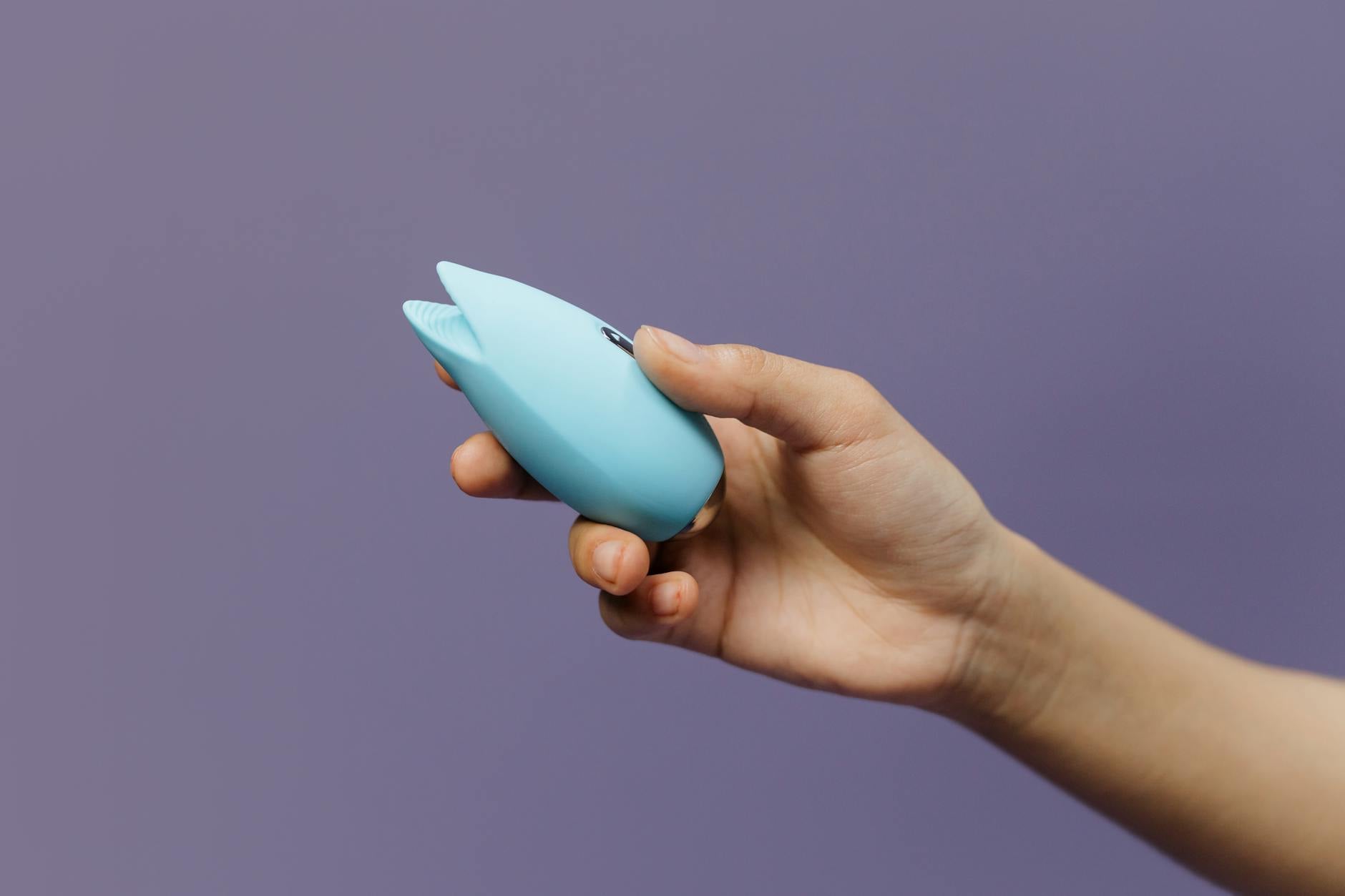
How to Use a Lemon Vibrator When Grief or Life Stress Dampens Arousal
When loss, work chaos, or family stress kills your desire, a lemon clitoral vibrator isn't the answer to the grief. But it can be a bridge back to your body. Here's how.
Let's be direct: grief and major life stress are not arousal conditions. Your nervous system is in protection mode. Blood is flowing away from pleasure centers and toward your prefrontal cortex, which is busy running crisis management. Desire isn't broken. Your body is doing exactly what it's supposed to do when everything feels unstable.
Most people respond to this by either white-knuckling through sex (which doesn't work and feels resentful) or by abandoning pleasure entirely for months, assuming they'll get back to it when life calms down. Sometimes that works. Often, disconnection becomes its own kind of loss that compounds the original grief.
Here's the thing I've seen work: a lemon vibrator can be a way back into your body that doesn't require the partner negotiation, the emotional bandwidth, or the false intimacy that partner sex demands when you're grief-stricken. Solo pleasure with a tool like a lemon clitoral vibrator is lower stakes. It's for you. It doesn't have to mean anything.
Grief and arousal are neurologically opposed states. When you're processing loss, your amygdala (the emotional processing center) is working overtime. At the same time, the areas of the brain responsible for sexual response are significantly quieter. Cortisol and adrenaline are high. Dopamine and acetylcholine, which fuel desire, are depleted.
Add to this the guilt that often comes with grief. People often feel they "shouldn't" be thinking about pleasure when someone they love has died, or when a family member is in crisis, or when the world feels precarious. The pleasure itself becomes something to avoid because wanting it feels like betrayal.
Work stress operates differently but lands in the same place. Chronic workplace anxiety keeps your nervous system in a state of low-level threat. The brain conserves energy for problem-solving at work and doesn't allocate it to pleasure-seeking. By the time you get home, the idea of sex feels like another task on a list that's already too long.
When you're stressed or grieving, partner sex often requires a performance that your depleted self can't offer. You have to be present with another person. You have to track their pleasure alongside your own. You might have to explain why you're not responding the way you normally do, and that explanation itself can be exhausting.
Solo sex with a lemon vibrator removes those layers. You're not performing for anyone. You don't have to narrate your emotional state or defend your desire. You're not managing someone else's feelings about your dampened arousal. It's just you and a tool designed to give you sensation without requiring anything from you in return.
For some people, this feels like permission. After weeks of managing everyone else's needs, the act of using a lemon clitoral vibrator is the first thing in the day that's entirely for your own sensation. It's radically small and completely selfish in the best way.
If you haven't had solo pleasure in months because of grief or stress, your body might feel foreign. You might not know what feels good anymore. That's normal. Dysregulation includes a kind of anhedonia where sensation itself is muted. Your pleasure receptors are still there. They're just quiet.
Start by touching your clitoris without any tool first. No vibrator, no pressure. Just light touch with your fingertips, noticing temperature and texture. Spend three to five minutes here. Don't try to build toward anything. You're just reintroducing your nervous system to the idea that touch on your body can feel like play instead of threat.
Once that feels neutral or slightly pleasant, introduce the lemon vibrator at its lowest setting. Many lemon adult toys have a wide range, so start at pattern one or two. Hold it against your clitoris with the gentlest possible pressure. This isn't about building toward orgasm. You're testing whether sensation feels available.
During this phase, you might notice that your brain keeps pulling you back into stress. A work email comes to mind. You remember something you forgot to handle. That's okay. Notice it and come back to your body without judgment. Your brain is doing what traumatized brains do. It's not a failure of the process.
One of the strangest discoveries I've witnessed with clients is that the body's capacity for pleasure often returns before the person feels emotionally ready for it. You'll be using a lemon clitoral vibrator, assuming nothing's working because you don't feel desire in your mind, and suddenly your body will have a small orgasm anyway. This is actually a good sign. It means the neurology is still there, waiting.
When this happens, don't interpret it as a sign that you should be feeling better than you do emotionally. Pleasure and grief can coexist. You can have an orgasm and still be sad about the person who died. You can feel aroused at work and still be exhausted by that job. These things live in different parts of your nervous system.
Let the orgasm happen if it comes. If it doesn't, that's fine too. You're rebuilding the pathway, not forcing an immediate result.
Don't aim for daily or even weekly. Instead, commit to twenty minutes once or twice a week when you have genuine privacy and don't have to rush. Your nervous system needs to know that this is not another task or obligation. It's not productive. It doesn't have a deadline.
The best time is often midafternoon on a weekend, when the day still has some structure but you're not in crisis mode. Many people in grief or high stress find that touching themselves in the early morning or late night gets tangled up with anxiety about the day ahead or rumination about what didn't get done.
Set a timer if it helps. Knowing you have exactly twenty minutes removes the pressure to perform or achieve. You can scroll your phone between touches. You can put the vibrator down and just lie there. The point is that you're claiming time for your own nervous system.
If you're in a relationship, your partner needs to understand that solo pleasure with a lemon vibrator during a grief or stress period is not about them or your relationship. It's about resource management. Your depleted nervous system needs a way to generate its own dopamine without the additional work of partnered sex.
You might say something like: "I'm going to take some time for myself this week because I need to recalibrate my nervous system. This isn't about you or us. It's just about me rebuilding a connection to my own body." Most partners understand this more easily than they understand sudden sexual withdrawal.
The paradox is that often, reconnecting to solo pleasure is what allows partnership to return naturally. Once you've reminded your body what sensation feels like, the invitation from your partner doesn't feel like another task. It feels like it might be okay.
You'll notice a shift in small ways. Maybe you catch yourself thinking about sensation during the day without deliberately initiating that thought. Maybe showering stops feeling like a chore and starts feeling like mild pleasure. Maybe you realize you haven't thought about work for five minutes.
These tiny wins matter more than orgasm. An orgasm is nice. But reclaiming the idea that your body can feel something other than stress or numbness is the actual transformation.
If you're using a lemon clitoral vibrator and feeling absolutely nothing after several weeks, that's worth checking in about. Sometimes grief or prolonged stress includes genuine anhedonia that doesn't shift without additional support like therapy or sometimes medication. That doesn't mean pleasure is gone forever. It means you might need a different kind of help alongside the solo work.
A lemon vibrator is a tool for pleasure, not a substitute for actual processing of grief or stress management. If you're using solo pleasure to avoid dealing with what's actually happening in your life, you'll eventually hit a ceiling. Pleasure can coexist with grief, but it shouldn't replace grief work.
If you're in genuine crisis or complicated grief, talk to a therapist first. If you're in chronic stress, look at what can actually change about your situation, not just your coping mechanisms. A lemon sucker is wonderful for reconnecting to your body. It's not a solution to the situation causing the dysregulation.
But for the person who's been untouched for months, who's grieving or exhausted and needs a way back into their own body that doesn't require explaining anything to anyone else, it works.
Completely normal. Grief suppresses arousal neurologically. Your body is prioritizing emotional processing and safety. Numbness during sex when you're grieving isn't a personal failure or a sign that your relationship is broken. It's your nervous system doing exactly what it should do during loss. Some people regain desire in weeks. Others take months. Both timelines are fine.
Yes, sometimes. The key is that a lemon clitoral vibrator gives you sensation without the emotional labor of partner sex. For people whose desire is suppressed by stress, reconnecting to solo pleasure first can rebuild the neural pathway to arousal. That said, the vibrator is a tool, not a miracle. If your stress hasn't actually decreased, desire might return only to disappear again when the next crisis hits.
There's no standard timeline. Some people regain desire within weeks. Others take several months. It depends on the severity of the loss or stress, your personal history with grief, your nervous system's natural resilience, and whether the stressor has actually resolved. Rather than waiting for arousal to return, using a lemon adult toy allows you to gently rebuild connection to your body while the emotional processing is still happening.
Yes. Emotional readiness and physical sensation are different things. Your body can have an orgasm while your mind is still processing loss. This isn't betrayal. It's how the nervous system works. The permission is more important than the emotional alignment. Allow yourself to feel pleasure alongside grief. Both are true.
It depends on your relationship. Some couples benefit from full transparency. Others find that keeping solo pleasure genuinely private protects both people. What matters more is that your partner understands you're managing your own nervous system, not that you're pulling away from the relationship. You might say, "I need some solo time to recalibrate," without detailed explanation.
That's genuine anhedonia, and it's worth talking to a therapist or doctor about. Numbness that doesn't shift after several weeks of gentle solo touch might indicate depression related to grief or chronic stress. Professional support through therapy or sometimes medication can help your nervous system regulate more comprehensively than a vibrator alone. It's not failure. It's knowing when you need a different kind of help.
Using a lemon clitoral vibrator when grief or stress has flattened your desire isn't about pushing yourself back to normal. It's about meeting yourself where you actually are and building a bridge back to sensation without judgment. Your body hasn't forgotten how to feel pleasure. It's just protecting itself. The lem vibrator is just a way to tell your nervous system that it's safe to come back.
Start with one twenty-minute session. Notice what happens. If it feels good, do it again in a few days. If it feels like nothing, give it a couple more tries before you worry. Your pleasure is still there, waiting. Sometimes it just needs a little patience and a tool that lets you explore without pressure.
If you're struggling with how to manage intimacy through this period, whether solo or with a partner, reach out. That's what support is for.
Sources: Lerchenfeldt, S., & Andrade, E. (2020). Stress and sexual dysfunction: A narrative review. Sexual Medicine Reviews, 8(2), 233-243. Basson, R. (2001). Using neurobiology and behavioral therapy to understand sexual motivation. The Journal of Sexual Medicine, 14(9), 1075-1090.