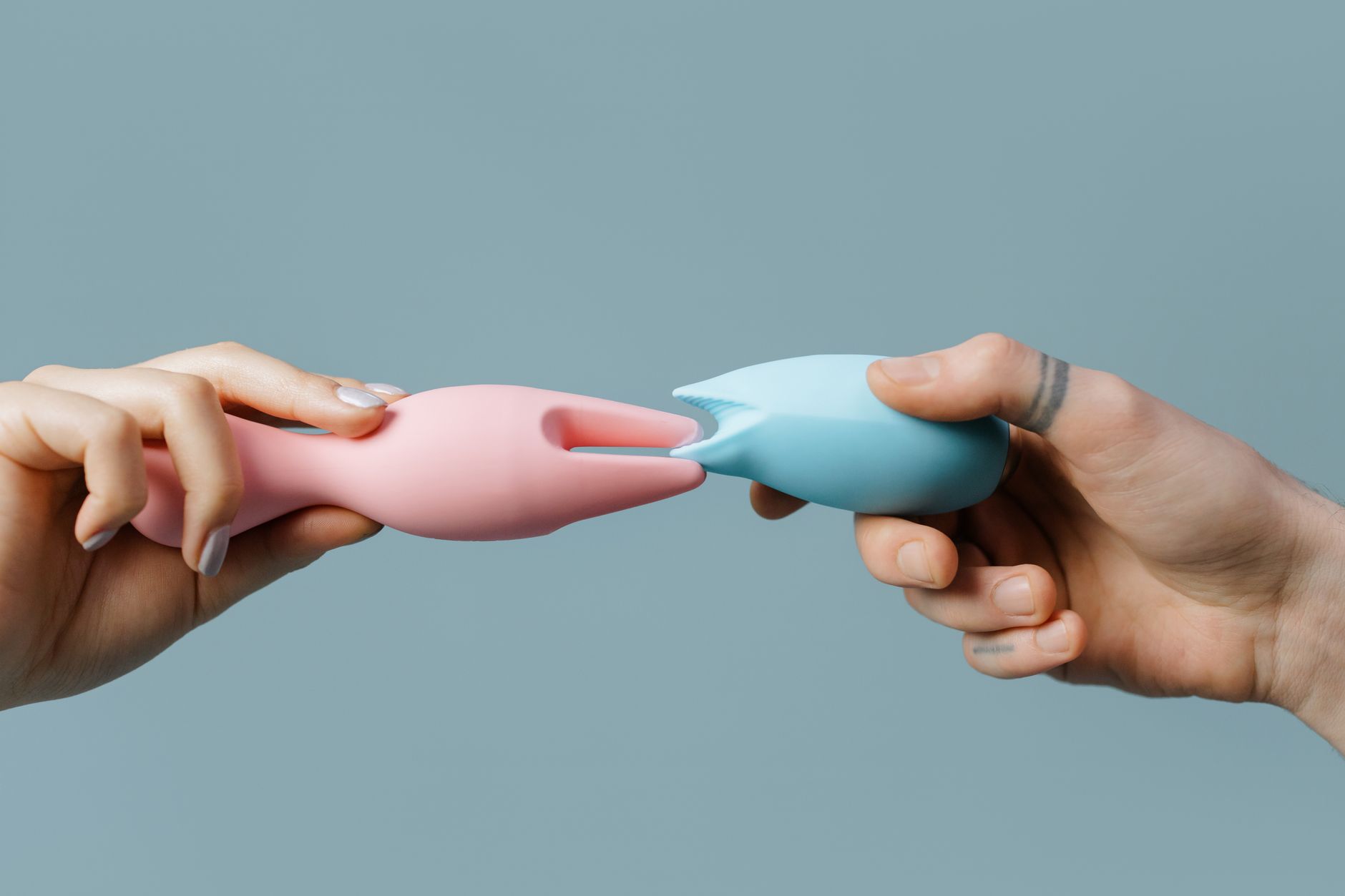
You can have an orgasm and feel completely empty. Your body works. Your clitoral vibrator works. But somewhere between the physical sensation and the part of you that's supposed to feel alive, the connection snaps. Pleasure without presence isn't actually pleasure. It's just a reflex. And if that's what you've been experiencing, you're not broken. You're disconnected. The good news? A lemon vibrator used with intention can rebuild that bridge.
This isn't about technique. It's about rewiring the relationship between your nervous system and your sense of self. When emotional intimacy disappears from sex, pleasure becomes a hollow echo. That might sound dramatic, but ask anyone who's been there: arousal without presence feels like going through motions while watching yourself from above.
Disconnection during pleasure happens for specific reasons, and most of them aren't your fault.
Stress and preoccupation. Your brain is running through work emails, financial anxiety, or relationship tension. Your body is being stimulated, but the person running your nervous system is somewhere else entirely. A lemon clitoral vibrator can't solve that directly, but it can create a focal point.
Learned performance. If you've spent years prioritizing a partner's pleasure over your own, or if you've been trained to perform orgasms on cue, your nervous system learns to dissociate. You're executing pleasure rather than experiencing it. This is especially common in long-term relationships where sex has become habitual or obligatory.
Numbness as self-protection. Sometimes emotional disconnection during sex is actually a survival strategy. If you've experienced sexual pressure, coercion, or intimacy that didn't feel safe, your nervous system may have learned to shut down during sexual touch as a form of self-defense. Your body goes through the motions while your mind stays protected at a distance.
Depression and dissociation. Both kill emotional presence. Depression flattens everything, including pleasure signals. Dissociation creates that watching-yourself-from-outside feeling where nothing feels real, even when it feels good.
Here's what matters: pleasure registers in two places. Your genitals register sensation. Your brain registers meaning. When those two aren't talking to each other, you feel nothing even while experiencing something.
A lemon vibrator changes the equation because air-suction stimulation activates a different cluster of nerve pathways than traditional vibration. The sensation is more diffuse, less mechanical, and harder to tune out. That forces attention. It's harder to dissociate when your nervous system is receiving a signal it can't automatically process.
Start with a practice, not a performance. This is crucial. You're not trying to have an orgasm. You're trying to feel something. Set aside 15 to 20 minutes when you're not tired, not rushed, and not expecting a particular outcome. Tell yourself: "I'm here to notice what I notice."
Begin with the environment, not the toy. Before you touch yourself, tend to your surroundings. Dim lighting. A temperature that feels good on your skin. Maybe a scent you like. Silence or music that doesn't pull your attention. You're signaling to your nervous system that this is a protected space.
Warm up manually first. Don't reach for your lemon vibrator immediately. Touch yourself with your hands for five minutes. Notice the temperature of your own touch. Notice what feels good and what doesn't. This isn't foreplay. It's a reconnection practice. You're remembering that your hands know you.
Then introduce the toy slowly. Start on a lower pattern. A lemon vibrator like the Lem has multiple intensity levels precisely for this. Begin at pattern 1 or 2 and stay there longer than you think you need to. The goal is to feel the sensation clearly enough that your brain can't dismiss it.
Use a naming practice. As you're using your lemon vibrator, internally name what you notice. Not in clinical language. Something like: "That's a buzz here, a warmth there, a tightness that just released." Naming creates a bridge between sensation and consciousness. It keeps your brain present.
Breathe intentionally. Most people hold their breath during pleasure because they're unconsciously pushing for an outcome. Instead, breathe like you're settling into something, not chasing it. Inhale for four, exhale for six. Breathing activates the parasympathetic nervous system, which is the opposite of dissociation.
Stop before you usually would. If you're used to pushing toward orgasm, this one feels counterintuitive. Instead, use your lemon vibrator until you feel something building, then pause. Leave it off for 30 to 60 seconds. Feel what happens. Then continue. This rhythm teaches your nervous system that pleasure isn't a line to the finish. It's a landscape to explore.
If you're in a relationship and experiencing emotional disconnection during partnered sex, a lemon vibrator solo practice is the foundation. But eventually, you need to talk about it. Not defensively, not accusatory. Something like: "I've noticed I check out during sex, and I'm working on being more present. I need your help."
Presence is mutual. If your partner is focused on their own pleasure and not attuned to you, your nervous system reads that as lack of safety. You withdraw. A good partner will want to know what "attuned" looks like for you. Show them.
When emotional connection returns to pleasure, it's subtle at first. You might notice that an orgasm feels different. Not necessarily bigger or longer. But anchored. Real. You're inside your body, not watching from above. Your breath catches at a particular moment. Your thighs clench in a way that surprises you. You feel something afterwards, not just relief that it's over.
That's the state you're building toward. And a lemon vibrator, used as a presence practice rather than a performance tool, is surprisingly effective at getting you there.
It depends on how long you've been disconnected. If it's been a few months, you might notice a shift in two to three weeks of regular practice. If it's been years, expect two to three months of consistent work. Your nervous system learns through repetition. Be patient with that process.
Orgasm is not the goal. Presence is. If you're focused on whether you'll come, you're not present. You're performing again. Some days your nervous system is in a better state than others. Honor that. Use your lemon vibrator on the days when it feels easiest to be present, and you'll find that pleasure follows.
It happens with both. Partnered sex requires even more presence because there's another person's nervous system in the mix. If you're disconnected during solo play, it's almost impossible to be present with a partner. Start alone. Build the skill. Then bring it into your relationship.
If numbness during sex persists after weeks of intentional practice and you're also feeling disconnected from other pleasures (food, social time, things you usually enjoy), talk to a therapist. That can be depression, trauma, or burnout. A lemon vibrator is a tool for rebuilding presence when you're ready. It's not a substitute for mental health care.
You'll notice small things first. You'll remember to breathe. You'll stay in the moment for two minutes instead of 30 seconds. You'll feel a sensation you recognize later. You'll orgasm and actually feel the release instead of just the relief. These small shifts compound. Trust them.
Yes. Water-based lube makes everything smoother, which means your nervous system gets less distracted by friction and more space to notice subtlety. Physical comfort creates the conditions for emotional presence. They're not separate.
Your lemon vibrator is a facilitator, not a fix. The real work is the decision to be present with yourself, which is harder than it sounds. In a world designed to keep you distracted, staying with your own pleasure requires intention.
But when you do, something shifts. Pleasure becomes something you own instead of something that happens to you. That's when a lemon clitoral vibrator becomes more than a toy. It becomes a practice.
Ready to rebuild that connection? Start this week. Set the timer for 15 minutes. Then notice. Everything else follows.