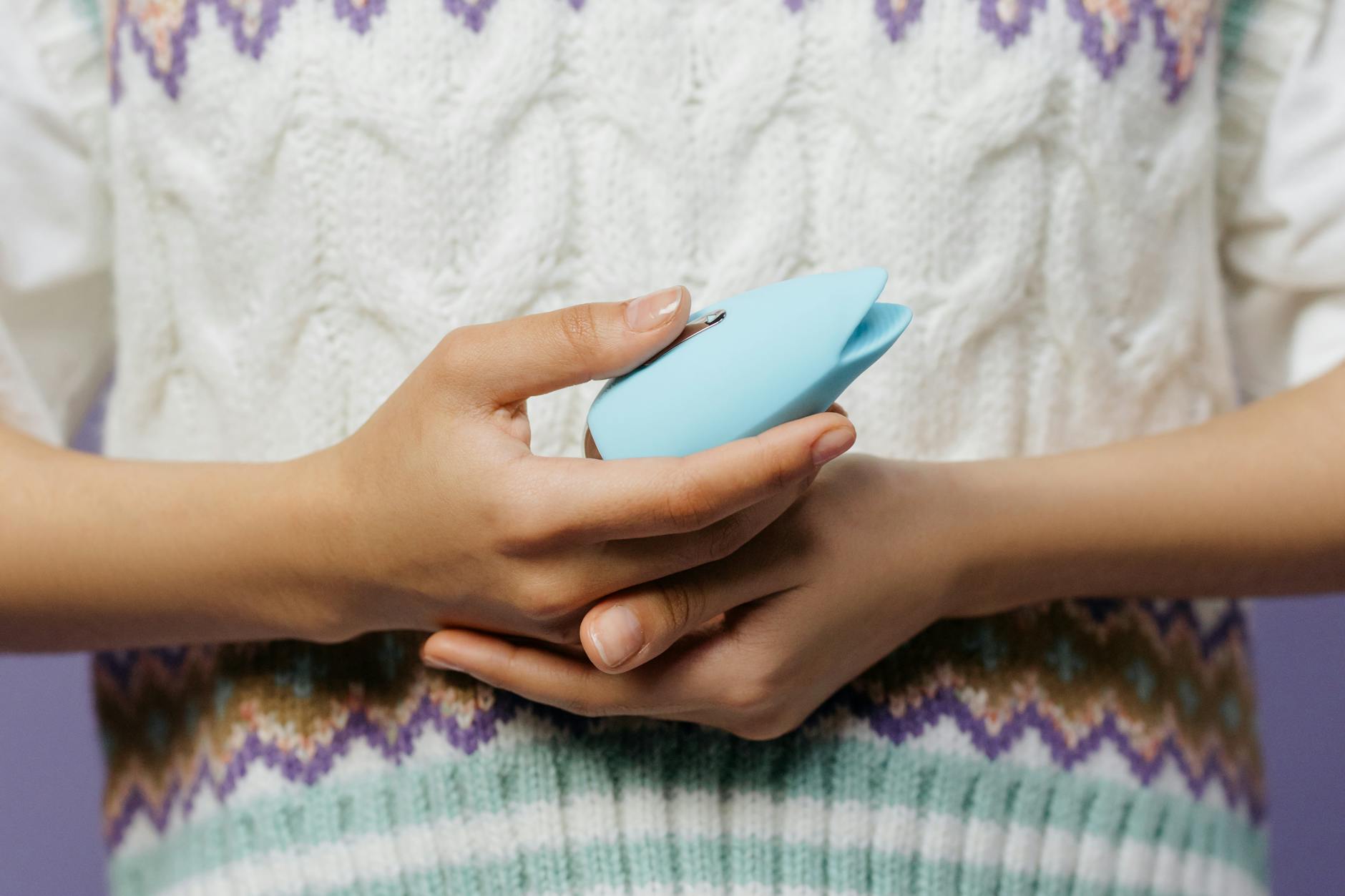
Let's start with the honest part
Hormones shift your entire pleasure landscape. Not in some vague spiritual way, but mechanically. Estrogen changes tissue thickness. Testosterone fluctuations reshape desire. Birth control rewires your arousal response. Perimenopause flattens sensation. And nobody warns you that the thing that used to work immediately might need a completely different approach now.
Here's what I see most often in my practice: someone notices their body isn't responding the same way it did six months ago, and they assume something is broken. It isn't. Your nervous system just needs different input now. That's where understanding your lemon clitoral vibrator, and how to use it during hormonal transitions, becomes genuinely life-changing.
Why hormonal shifts change physical sensation
Let's get the biology straight, because it matters for knowing what to do about it.
Estrogen affects nerve sensitivity, tissue hydration, and blood flow to the pelvic region. When estrogen drops (whether from birth control changes, perimenopause, or natural cycle fluctuations), the clitoral tissue becomes less plump, less vascular, and sometimes less responsive to direct pressure. This doesn't mean sensation disappears. It means the pathway to pleasure changes.
Testosterone (yes, people with ovaries produce it) drives spontaneous desire and the intensity of orgasms. A shift in testosterone levels, even small ones, can make arousal feel slower to build and orgasms feel less sharp. Some people describe it as muted. Others say arousal takes longer but feels deeper when it arrives.
Progesterone levels also influence arousal. Higher progesterone in the luteal phase of your cycle can dampen desire and make sensation feel less acute. This is why some people feel completely different pleasure responses in different weeks of their cycle.
Birth control pills specifically lower free testosterone by increasing sex hormone binding globulin. If you've recently started hormonal contraception, or switched types, this is often why sensation feels flattened. It's not permanent, but it's real.
How a lemon sucker actually helps with reduced sensation
This is where air-suction technology matters more than traditional vibration alone.
A lemon vibrator (often called a lem vibrator or lemon sucker) works through gentle suction and pulsing rather than surface vibration. This means it stimulates deeper nerve clusters in the clitoral complex without requiring the tissue to be super responsive on the surface. It's less dependent on baseline sensitivity than a traditional vibrator would be.
Think of it this way: a standard vibrator relies on your tissue being reactive and responsive. Air-suction creates a stimulation pattern that pulls nerve endings into the sensation regardless of how plump or reactive the tissue is. For someone experiencing hormonal-related sensation changes, this is genuinely valuable.
The suction also increases blood flow and engorgement over time, which can help restore some of the natural responsiveness that hormonal shifts have temporarily reduced. Many people report that after using a lemon clitoral vibrator regularly, their baseline sensation improves even in daily life.
The warm-up principle you're probably skipping
When sensation feels muted, most people try to solve it by turning up intensity. That usually backfires.
Instead, extend your warm-up window. If you normally need five minutes to get aroused, give yourself 15 now. This isn't wasting time. This is building arousal gradually so your nervous system has room to register sensation at each stage.
Start with lower intensity patterns on your lemon vibrator. Most devices (including the Lem) have gentler settings on the lower end. Your goal isn't to jump to maximum intensity immediately. It's to let your body build arousal in steps, which actually sensitizes your nerve endings as you go.
I recommend a pattern like this:
Minutes 1-3: Patterns 1-2 on the lemon sucker, exploring where sensation registers best for you right now. This might be the clitoral hood rather than direct clitoral contact.
Minutes 4-7: Patterns 2-4, with slight variations in angle and pressure. Let your body signal where it wants more focus.
Minutes 8-12: Patterns 4-6, building intensity as arousal builds. Your tissue should feel more reactive now than it did at minute one.
This graduated approach works because you're not asking your body to jump from zero arousal to full stimulation. You're building a chain reaction.
Positioning and angle matter more now
When tissue is less reactive, precision matters.
Direct clitoral contact might feel overstimulating or numb. Try shifting the lemon clitoral vibrator angle so it's stimulating the clitoral hood or the sides of the clitoris rather than the glans directly. Reposition every few minutes and notice where sensation feels sharper.
Many people find that during hormonal transitions, the sides and base of the clitoral complex become the most sensitive zone. A lemon vibrator's gentle suction can reach these areas in ways traditional vibrators can't.
Also: angle changes arousal. If you're lying flat and sensation feels distant, try angling your hips slightly or using a pillow to shift your pelvis. Small angle changes can mean the difference between numb and satisfying.
Lubrication is not optional
Hormonal changes often mean less natural lubrication, even if you're very aroused. This isn't a sign something's wrong. It's a sign your body needs external support.
Use a water-based lubricant generously. Apply it to both the lemon sucker and your vulva. This does two things: it reduces friction (which can feel uncomfortable when tissue is less reactive), and it improves the seal for suction, making the air-suction effect more consistent.
If you use silicone-based toys elsewhere, stick to water-based lube with your lemon clitoral vibrator. Silicone lube can degrade silicone toys over time. Water-based works beautifully and washes off easily.
The mental piece is not separate from the physical piece
Here's what I see happen: someone experiences reduced sensation from hormonal changes, assumes something's wrong, gets anxious about their body, and then the anxiety makes arousal even harder. The physical and psychological are completely entangled.
Using a lemon vibrator during hormonal transitions is not just a mechanical fix. It's also permission. Permission to explore your changing body without judgment. Permission to need different input than you needed before. Permission to spend time on pleasure even when sensation feels less automatic.
Many of my clients report that the ritual of using a lemon sucker during periods of hormonal change actually helps them rebuild body confidence. You're not fighting your body's changes. You're working with them.
When to consider talking to a provider
If sensation loss is sudden and dramatic, or if you've also noticed pain, vaginal dryness that lube doesn't help, or complete loss of interest in pleasure, see a doctor or gynaecologist. These can sometimes indicate thyroid changes, hormonal imbalances that need treatment, or other things worth checking.
But if the sensation change is gradual and matches a known hormonal transition (starting birth control, entering perimenopause, cycle phase changes), you're likely just experiencing a normal shift that responds well to the right tools and approach.
People also ask
Can a lemon vibrator help with birth control-related numbness?
Yes, often significantly. The Lem's air-suction technology is particularly helpful because it stimulates deeper nerve clusters less dependent on tissue reactivity. Many people report that regular use actually improves baseline sensation over time, even outside of sex. Give it at least two weeks of consistent use before deciding if it's working for you.
How long does it usually take for sensation to return after hormonal shifts?
It depends on what caused the shift. Birth control numbness can improve within 3-6 months of switching methods, though sensation often returns gradually. Perimenopause sensation changes persist longer, sometimes indefinitely, which is why adapting your approach rather than waiting for things to "return to normal" matters more. You're building a new relationship with your body, not waiting for it to go back.
Should I stop using my lemon vibrator if sensation feels numb at first?
No. Numbness is often a signal to use it differently, not to stop. Lower intensity, longer warm-up, angle adjustments, more lube. Keep using it while you adjust your approach. Many people experience a noticeable shift in sensation within the first week or two of consistent, methodical use.
Does caffeine or hydration affect sensation with a lemon clitoral vibrator?
Absolutely. Dehydration reduces blood flow to all tissues, including the clitoral complex. If you're not drinking enough water, sensation will feel more muted. Caffeine can either help or hurt depending on your sensitivity; some people find it sharpens sensation, others find it makes them too tense. Track what you notice over a few weeks.
Can I use a lemon sucker during all phases of my cycle?
Yes, but your response will vary. In the luteal phase (when progesterone is higher), you might need even longer warm-up and might prefer lower intensity. In the follicular phase (when estrogen is rising), sensation typically sharpens and you might find higher intensities satisfying. Understanding your own cycle and lemon vibrator response takes a few weeks of attention, but it's worth it.
Is sensation loss from hormonal changes permanent?
Not always, but it's not always temporary either. Some hormonal transitions (birth control changes) may be reversible. Others (perimenopause) are permanent physical changes you learn to work with. The good news: you don't have to choose between pleasure and hormonal stability. You just need the right tools and knowledge, which a lemon clitoral vibrator provides.
The bottom line
Hormonal changes are real, sensation loss is real, and it's also completely manageable. You're not broken. Your body isn't failing you. You're just operating under different settings now, and that's information worth acting on.
A lemon vibrator is specifically designed for exactly this moment. The gentleness of air-suction technology paired with patience, longer warm-up, and attention to positioning can rebuild not just pleasure, but pleasure that feels like it belongs to the body you have now, not the body you used to have.
If you're navigating hormonal changes and reduced sensation, you deserve an approach that meets you where you are. Start here. Adjust as you go. And give your body the time it needs to remember how to feel good.
Have questions about getting started or finding your rhythm? Let's talk.