The consistency trap nobody talks about
Let's be real. Solo sex is supposed to be the one place where you get exactly what you want, exactly when you want it. No negotiation, no timing mismatches, no pressure to perform. And yet, somehow, that freedom can feel more complicated than partnered sex. You might find yourself chasing intensity that won't come, starting and stopping, second-guessing your approach, or getting frustrated because "it was better last time."
That inconsistency isn't a sign you're doing something wrong. It's actually the most common friction point in solo pleasure, and it's almost always fixable.
Why solo pleasure feels inconsistent
Three things work against you when you're flying solo. First, there's no external rhythm holding your attention. With a partner, their presence, breath, and movement create a structure. When you're alone, your brain has infinite room to wander into stress, overthinking, or self-judgment. Second, your body's sensitivity genuinely varies day to day based on cycle, stress, sleep, caffeine, what you ate, and a hundred other micro-factors. Solo sex makes you hyperaware of that variability because there's nothing else to focus on. Third, you're probably not giving yourself permission to build slowly. Most people treat solo pleasure like a sprint to orgasm instead of a journey with a destination.
That's where a lemon vibrator changes things.
How a lemon vibrator builds structure into solo pleasure
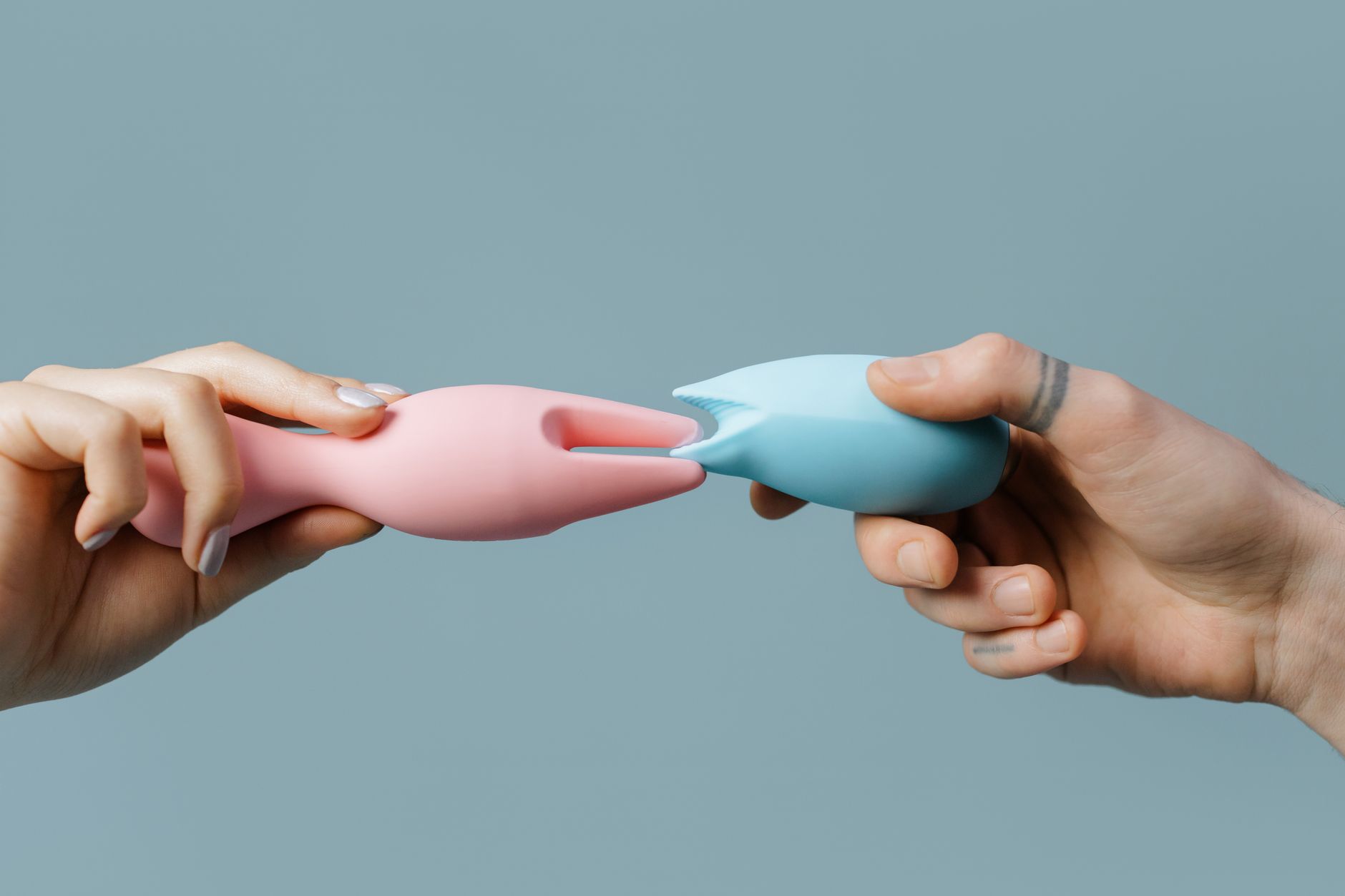
The design of a lemon clitoral vibrator, with its curved suction pattern and multiple intensity settings, creates a natural rhythm that you can return to every time. Unlike a basic bullet vibrator with three speeds, a lemon vibrator's graduated settings allow you to follow your body's actual arousal curve instead of jumping straight to maximum intensity and wondering why nothing's happening.
Here's what that looks like in practice. You start at pattern one or two. Your body registers the sensation without feeling rushed. Your nervous system settles. You spend five to ten minutes here, long enough for blood to actually flow to your genitals and for arousal to build from curiosity into genuine interest. Then you move to the next setting, not because you're bored, but because your body is ready for slightly more intensity. That progression feels intentional. It gives you a roadmap that's the same every time, which paradoxically makes the experience feel fresher, not repetitive.
Building your own solo ritual
Consistency isn't about doing the exact same thing until it feels robotic. It's about having a reliable structure that your brain and body can trust. Here's how I work with clients on this.
Start with timing, not intensity. Pick a time when your energy is consistent, not when you're exhausted or wired. For some people, that's morning. For others, it's evening. The day of the week matters less than the consistency. Your brain starts associating that time slot with permission and arousal.
Create a five-minute entry ritual. This could be washing your hands, lighting a candle, changing into something that feels good on your skin, or putting your phone in another room. The action itself barely matters. What matters is that your nervous system recognizes the signal. You're shifting from "normal life" into "this is time for me."
Follow the same progression every time for at least two weeks. If you're using a lemon vibrator, that might be: pattern one for five minutes, pattern two for seven, pattern three until you feel ready to build toward climax. Stick with that sequence. Your body learns what's coming and responds more quickly because there's no uncertainty.
Notice what changes day to day, and let it. Some days you'll need longer at pattern one. Some days you'll move faster. Some days you won't climax, and that's not a failure. What matters is that you're following the ritual, showing up for yourself, and staying curious instead of frustrated.
The role of sensation mapping
When you commit to a consistent ritual with your lemon vibrator, something interesting happens. Instead of chasing a moving target called "what works," you start mapping your own arousal landscape. You notice that the left side of your clitoris responds differently than the right. You realize that pattern two actually gets you further than pattern three because the rhythm matches your natural response tempo better. You discover that you need ten minutes of building before intensity even registers.
That knowledge is gold. It means you're not relying on willpower or luck. You're working with your actual physiology.
Once you've mapped your landscape over two to three weeks, you can start experimenting. Try pattern three from the start on a low-stress day and see what happens. Add music to one session. Try a different time of day. The structure you've built makes those experiments meaningful because you have a baseline to compare against.
What happens when the ritual breaks
Life interrupts. Vacation, stress, a new medication, hormonal shifts, health stuff. Your established ritual stops working the same way. Here's what matters: you don't panic and assume your body has changed permanently. You return to the beginning of your ritual, start at pattern one, and rebuild for another two weeks.
Your lemon vibrator isn't a magic fix that works identically every time. It's a tool that helps you listen to your body's current truth and work with it instead of against it. That's actually more powerful than magic because it adapts.
Solo pleasure as self-knowledge
Consistency in solo pleasure isn't about perfecting technique. It's about building a relationship with your own body. When you show up for yourself at the same time, in the same way, with tools like a lemon vibrator that feel reliable, you're doing something that sounds simple but is genuinely rare: you're teaching yourself that your pleasure matters enough to be intentional about.
That consistency ripples outward. The ease you build in solo pleasure feeds into how you show up in your own life. The permission you give yourself to spend time on something that feels good, with no external payoff, changes how you relate to your own needs. And yes, if you're partnered, that grounded self-knowledge makes partnered pleasure better too because you're not confused about what your body actually wants.
FAQ: Lemon vibrator consistency and solo pleasure
How long does it take to feel like my lemon vibrator routine is actually consistent?
Most people need two to four weeks before the ritual feels natural instead of effortful. Your nervous system needs time to recognize the pattern. Don't write off the lemon vibrator as "not working" until you've given yourself at least fourteen days of regular use at the same time, with the same entry ritual, following the same intensity progression. After that, you'll have real data.
What if I'm still not reaching orgasm after a month of consistent use?
First, check that you're not conflating consistency with orgasm. Consistency means showing up regularly and following your progression. Orgasm is one possible outcome, not the goal. That said, if you're using your lemon vibrator correctly and arousal still isn't building, it's worth talking to a healthcare provider. Medication, hormonal shifts, or stress can genuinely reduce sensitivity. They're not character flaws. But a professional can help you figure out if something needs attention.
Can I use different patterns each time, or does that break my consistency ritual?
Once you've built a reliable baseline over two to four weeks, you absolutely can experiment. Variation within structure is where solo pleasure actually gets interesting. Think of your entry ritual and your first two patterns as the non-negotiable foundation, and the rest as your creative space.
Does my lemon vibrator need a specific kind of lube for consistency?
Water-based lube helps a lemon clitoral vibrator work more smoothly and reduces friction that can feel jarring. But lube isn't required for consistency. What matters more is that you're using the same lube every time (or no lube, if you prefer) so your body knows what sensation to expect. Consistency is partly about removing variables so your body can relax into the familiar.
I've been using my lemon vibrator the same way for two months and it still feels disconnected. What now?
This usually means your nervous system is still carrying tension into the ritual. I'd ask: Are you actually in a calm headspace, or are you squeezing solo pleasure into the leftover time between other demands? Can you extend your entry ritual to fifteen minutes and genuinely let your brain shift gears? Sometimes consistency doesn't fix disconnection. Permission and presence do.
Is it normal that my lemon vibrator works great solo but feels less consistent with a partner?
Completely normal. Solo pleasure is you and your body. Partnered pleasure adds another person's rhythm, timing, and energy. The skills overlap, but they're not identical. If you want to carry that solo consistency into partnered sex, try using a lemon vibrator with a partner when your pleasure timing never aligns. That's a different conversation.
Build your rhythm and trust it
Consistency in solo pleasure isn't about doing everything perfectly. It's about doing the same intentional thing, over and over, long enough for your body and brain to trust the rhythm. A lemon vibrator gives you a reliable tool that makes that ritual feel structured without feeling rigid. Your pleasure doesn't have to chase a moving target. It can settle into something steady, knowable, and deeply yours.