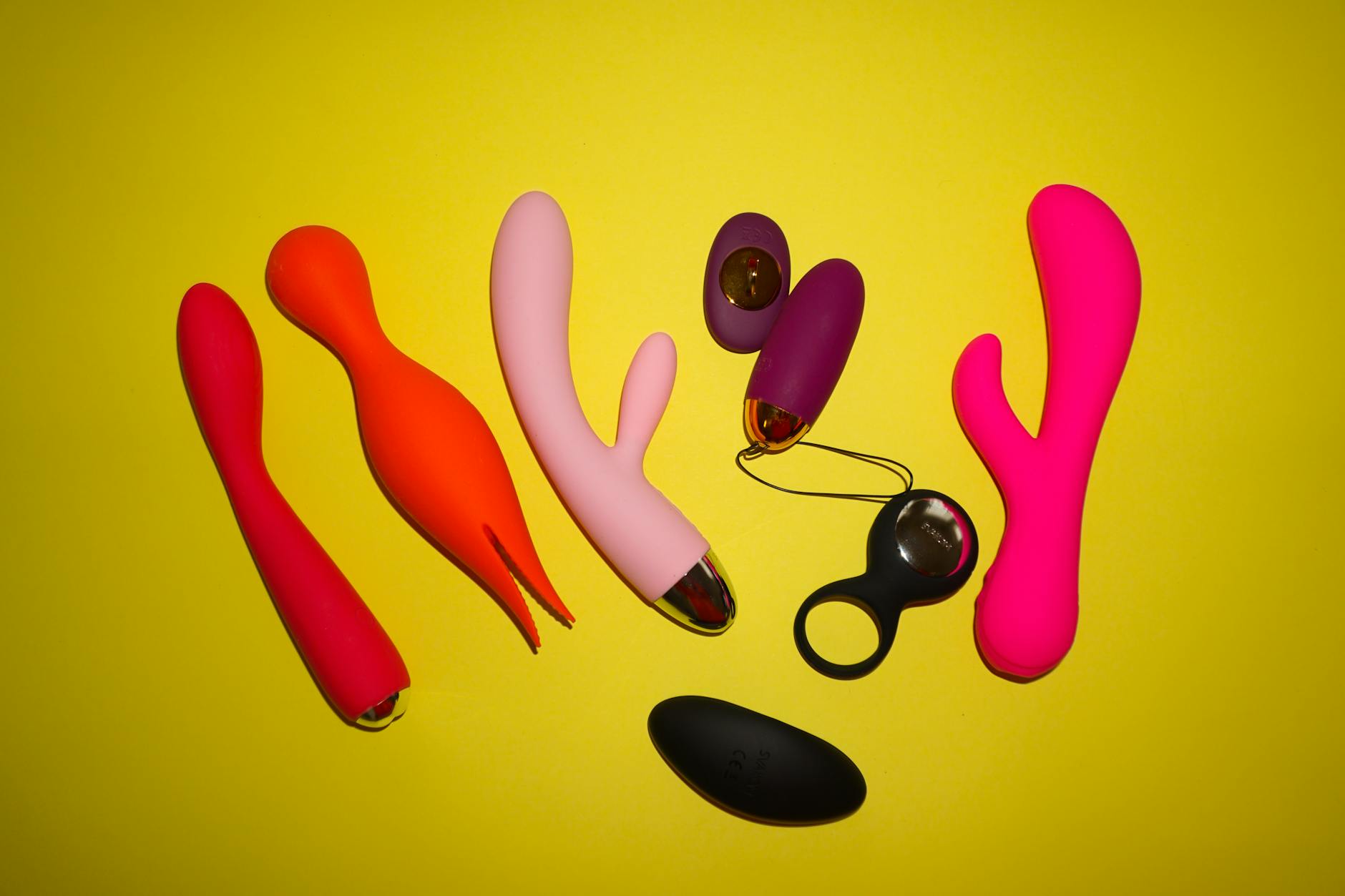
Why Clitoral Vibrator Intensity Settings Confuse Most People (and How to Find Yours)
Most people skip between vibrator settings randomly instead of building a map of what their body actually needs. Here's how to decode intensity, pattern, and stimulation to find your sweet spot.
Honestly, most people treat vibrator settings like a mystery they're supposed to already know how to solve. You turn it on, it feels either too much or not enough, and you assume your body is the problem. Spoiler: it's not.
Here's the thing. Every body has a different tolerance map for vibration intensity, frequency, and pattern. That's not a flaw. It's actually incredibly useful information if you know how to read it.
When people talk about vibrator settings, they usually mean intensity. But intensity is more complicated than a simple volume dial. You're actually juggling three separate variables that work together.
First, there's frequency, which is how many vibrations per second the toy produces. Higher frequency doesn't always feel better. Some bodies prefer deeper, slower pulses. Others want rapid micro-movements. Frequency lives in the 50 to 10,000 Hz range depending on the toy, and where you land in that spectrum matters wildly.
Second, there's amplitude, which is how far the vibration travels. A toy with high amplitude creates bigger movements. A low amplitude toy creates tighter, more concentrated sensation. Again, neither is "better." Your nervous system just has a preference.
Third, there's pattern complexity. Some clitoral vibrators cycle through preset patterns, pulsing and ramping in choreographed ways. Others stick to steady vibration. Many people assume patterns are just a novelty. They're not. Patterns can actually help if your body gets desensitized to constant vibration, because they create rhythm and variety your nerve endings don't tune out as quickly.
When you feel like a setting isn't working, it's usually because one of these three variables is outside your current window of what feels good.
Here's something nobody warns you about. If you start on a high intensity setting, your body adapts to it almost immediately. Your nerves stop registering the signal as new or interesting. This doesn't mean you're broken or losing sensation permanently. It means you've created a temporary set point.
Then you turn up the intensity again, your body adapts again, and you end up chasing a feeling that's moving away faster than you can reach it. I see this pattern constantly with lemon vibrators and other clitoral toys.
The fix is counterintuitive: start lower than you think you need to. Way lower. Like setting 2 or 3 on a toy with 8 or 10 options. Spend 30 seconds there. Let your body wake up to the sensation. Then gradually increase. This trains your nervous system to register subtlety instead of only registering shock.
Here's what actually works. Set aside 20 minutes where you're not rushed and you're genuinely curious instead of goal-focused. This is about exploration, not climax.
Start with the lowest setting on your lemon clitoral vibrator or whichever toy you're using. Spend about two minutes there. Notice what it feels like. Is it pleasant? Boring? Too light? Make a mental note. Then increase to the next setting and do the same.
Do this all the way through the range. By the end, you'll have a map. Something like: 1-2 feel light and pleasant but not quite enough, 3-4 are my sweet spot, 5-6 start feeling sharp, 7-8 feel exhausting. Everyone's map looks different, and most people's maps change based on where they are in their cycle, their stress level, and what's happening in their life.
The key is not judging the settings as "good" or "bad." They're just information. A setting that feels too intense today might be perfect tomorrow. That's not a contradiction. That's data.
If your toy has pattern options, most people use them as a novelty for five minutes and then go back to straight vibration. I want to reframe that.
Patterns are actually helpful for two specific situations. First, if you're someone who tends to plateau during stimulation, patterns interrupt that plateau. Your nervous system has to pay attention again instead of just settling into a groove.
Second, if you have a partner, patterns can create a shared rhythm. This sounds small, but it actually changes the experience of being together. Instead of one person using a toy while the other waits, you're both tracking the same beat. It's a subtle difference that creates a lot more connection.
Not every pattern will work for you. Some will feel chaotic. Others will feel perfect. The same pattern might feel great one week and weird another week. This is normal. Your nervous system is responsive, not static.
This is where I see people make a real mistake. They think if a setting feels uncomfortable, they should keep going until it feels good. That's not how bodies work.
There's a difference between intensity that feels strong in a good way and intensity that feels painful or alarming. Strong intensity should feel like, "Wow, that's a lot, and I like it." Painful intensity feels sharp or raw. If you're experiencing pain, stop and go down a setting or two.
That said, your comfort window expands over time. A setting that feels too intense on day one might feel perfect on day ten. You're not changing. Your nervous system is just learning what to do with the signal.
If you're using a lemon sucker or similar toy, remember that suction creates a different kind of stimulation than traditional vibration. Suction intensity works a bit differently because it's pulling tissue rather than oscillating it. Start even lower with suction if you're new to it.
Your ideal settings might change depending on whether you're alone or with someone else. When you're solo, you have complete control. You can pause whenever you want, change settings mid-session, experiment without explanation. That freedom matters.
When you're with a partner, there's another person in the feedback loop. You might feel pressure to perform or maintain a pace that doesn't match your actual build-up. This can push people toward higher intensity settings than they'd choose alone, just to speed up the process.
If this is you, here's what helps. Talk to your partner about what you need. Something like, "I'm learning how my body responds to different settings. I need to go slow and take my time." That gives you permission to actually map your preferences instead of defaulting to what feels fastest.
Many people find that starting with a lower setting than they'd use solo actually creates better sensation when a partner is involved, because they're not exhausted before anything else happens.
Let's get specific about the three main vibration types you'll encounter in clitoral vibrators like the Lem.
Steady vibration is exactly what it sounds like. Constant, unwavering oscillation at your chosen frequency. This is great for people who like consistency and predictability. Some bodies find steady vibration can create desensitization faster because there's no variety, but others find the consistency incredibly relaxing.
Pulse settings ramp up and down. The vibration builds, peaks, then drops back down, then builds again. This creates rhythm. Some pulses are subtle. Others feel like strong waves. Pulses help with plateau because every peak is a new stimulus.
Pattern cycles combine different rhythms. You might get a burst of high intensity, a pause, a flutter, another burst. Patterns are basically the disco version of vibration. They're brilliant for preventing habituation and they're fun, but they require mental engagement. You have to stay present instead of just letting your body float.
None of these is better. Your body will tell you which one works best for your current state. And that answer might change.
Here's something really important that people rarely connect. How much your toy's intensity feels good is partly determined by lubrication, not just by the toy itself.
Without adequate lubrication, vibration can feel scratchy or uncomfortable even at a medium setting. With good lubrication, the same setting feels smooth and pleasurable. This is why I always recommend water-based lube when you're using a clitoral vibrator. It's not about something being broken. It's about creating the right conditions for your toy to feel its best.
Silicone-based lubes feel richer, but they can damage silicone toys over time, so stick with water-based if your toy is silicone. Reapply as you go. Friction changes sensation intensity, so maintaining the glide actually helps you maintain your preferred settings without having to crank them up.
If a setting feels uncomfortable every single time, you're probably choosing a frequency your nervous system just doesn't like. Try a different setting or a different pattern. If the toy itself is the issue, that's valuable too. Not every toy works for every body, and that's fine.
If you find yourself always cranking to the highest setting within two minutes, you're likely experiencing the desensitization pattern I mentioned earlier. Pull back intentionally. Start lower next time. Give your nervous system the chance to recalibrate.
If you feel numb or distant from sensation even at middle settings, this might signal that your body needs a break or that something emotional is in the way. When you feel disconnected from your body, sensation returns more slowly. That's actually okay. You're not doing it wrong. You're just in a different state.
If a setting feels perfect for ten minutes and then stops working, that's normal sensation adaptation. Change the setting slightly, switch patterns, or take a five-minute break. Your sensitivity will reset.
Here's my recommendation. Treat intensity exploration like you'd treat learning any skill. Do it intentionally, not randomly.
Pick one session a week where your only goal is to map your preferences. Not to orgasm. Not to feel amazing. Just to gather information. Try different settings in sequence. Notice what each one does. Write it down if that helps. "Setting 3 feels gentle and warm. Setting 5 feels intense in a good way. Setting 7 feels too sharp."
Over three or four weeks, you'll have a solid understanding of what your body actually wants. Then you can stop guessing. You can walk into a session knowing exactly what you're looking for.
And here's the thing that often surprises people. Once you know your settings, your pleasure actually improves because you're not wasting time negotiating with the toy. You go straight to what works. That feels like freedom.
Your nervous system isn't static. It responds to stress, sleep, hormones, how you're feeling emotionally, and even what you ate. A setting that feels great on a well-rested, relaxed morning might feel overwhelming if you're stressed or exhausted. This isn't the vibrator changing. This is your body's readiness changing. It's actually useful information. Instead of fighting it, adjust your settings to match your state that day.
This is a common worry, and I want to be clear. No. Your nervous system is incredibly resilient. What you might experience is temporary desensitization, which just means your nerves have adapted to a particular frequency or intensity. This reverses quickly once you take a break or lower the intensity. It's not permanent, and it's not damage. It's adaptation.
If you feel pain, numbness, or soreness afterward, the intensity is too high for your body right now. Good intensity should feel strong but pleasant. You should feel energized after, not raw or exhausted. If you're not sure, lower the setting and see if the experience feels better. You can always increase next time.
No. Most people have a range where orgasm is possible, usually around settings 4 through 7 on a toy with 10 settings, but that varies wildly. Some people can reach climax at low settings. Others need higher intensity. Some settings feel better for buildup and others for the finish. You're not doing anything wrong if your body doesn't respond the same at every setting.
This is actually super common and totally manageable. If you're using a vibrator together, you might take turns choosing the settings, or you might find a middle-ground setting you both enjoy. Some couples use two toys so everyone can have their preference. The key is just talking about it instead of assuming one intensity should work for both of you.
Sometimes, but not always. Lower intensity might mean you feel more sensation detail, which can actually speed things up for some people. It really depends on your individual nervous system. The goal shouldn't be speed anyway. The goal should be pleasure. If lower intensity feels better, take the time it takes. The quality of the experience matters way more than the duration.